Mid Taper Fade Black Men: 35 Stylish Haircut Ideas
You sit down in the chair and your barber asks, “What are we doing today?” If you freeze up here, you’re not alone. A mid taper fade is one of the safest, sharpest answers you can give, and it works on almost every hair type Black men deal with. This guide walks you through 35 real versions of the cut, tells you the guard numbers to ask for, and gives you the exact words to use so you don’t leave with something you didn’t want.
We’re not going to repeat the same tired “here’s what a fade is” filler you’ve read on ten other sites. You’ll get real price ranges, real face-shape advice, and a script you can literally read off your phone in the chair.
What Is a Mid Taper Fade for Black Men and Why Does It Work So Well?
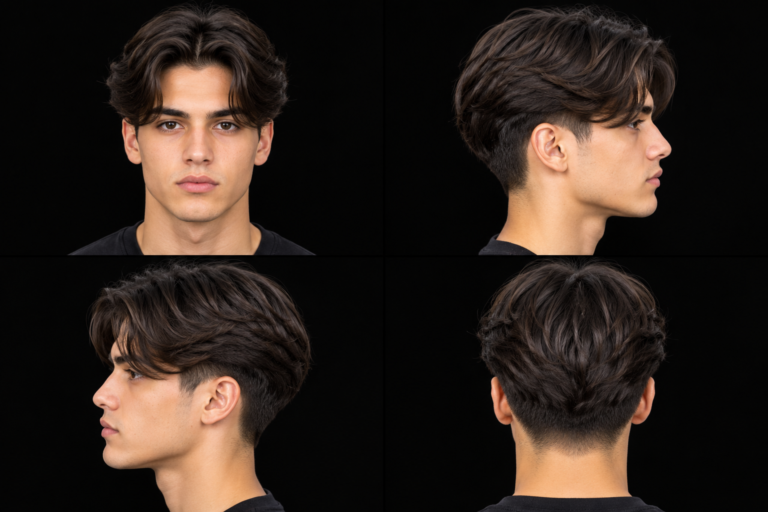
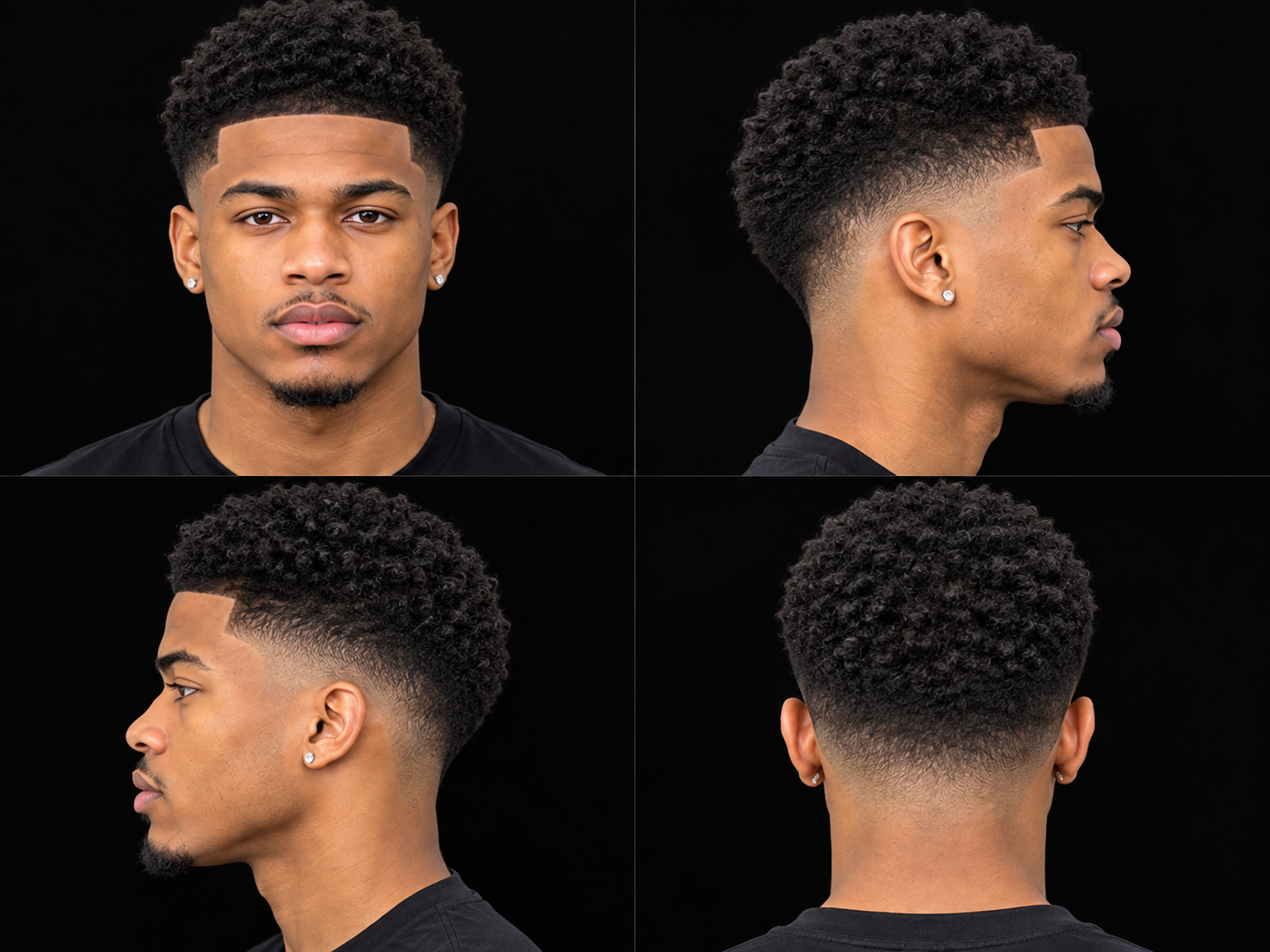
A mid taper fade starts blending hair at the middle of the head, roughly between the temple and the top of the ear. That placement is why barbers call it the “middle ground” fade — not too bold, not too safe. It works so well on Black hair because coily and curly textures hold shape at the crown while the sides taper down clean, so you get contrast without losing volume on top.
What is a mid-taper fade?
A mid-taper fade is a haircut where the fade begins around the middle of the side of the head. It sits between a low fade (starts near the ear) and a high fade (starts near the temple). Most barbers use a #2 or #3 guard at the starting point, then blend down to skin or a #0.5 near the neckline.
Also Read This Style: Long Hair Low Taper Fade: 23 Stylish Hairstyles for Men
Is mid-fade haram in Islam?
A mid taper fade itself is not considered haram by most scholars, since it’s simply a hairstyle choice. Some conservative interpretations discourage extreme designs or shapes that mimic non-Muslim religious symbols, but a plain fade with no shaved patterns is generally seen as permissible. If you want a clear answer for your own practice, ask a local imam, since views differ by region and school of thought.
What’s better, mid-fade or taper?
A taper is the general technique of gradually shortening hair without going to skin, while a mid-fade goes all the way down to skin starting at the mid-point of the head. A mid taper fade actually blends both — the top tapers naturally into a true fade at the sides. If you want more length kept overall, ask for “more taper, less fade.” If you want sharper contrast, ask for “more fade.”
What fade is the most attractive?
Barbers and stylists most often point to the mid fade as the most universally flattering option. It balances the face without the extreme skin-close look of a high fade or the subtle blend of a low fade. A 2023 survey by a UK grooming brand found mid fades were the most requested fade style among men under 35.
What does a 3:2:1 fade look like?
A 3:2:1 fade uses three guard lengths in sequence — a #3 on top of the fade zone, a #2 in the middle, and a #1 near the bottom edge. This creates a smooth, staged blend instead of one hard drop in length. Ask your barber for “a 3:2:1 blend on the sides” if you want extra smoothness without a fully skin-close finish.
Mid Taper Fade vs Low Taper vs High Taper: What’s the Real Difference?
The real difference between these three fades comes down to where the blending starts on your head. A low taper fade starts near the ear, keeping more length up top for a subtle look. A high taper fade starts near the temple, giving you the boldest contrast. The mid taper fade sits right in between, which is why so many barbers recommend it to first-timers.
| Fade Type | Starting Point | Best For | Guard Range | Maintenance |
| Low Taper Fade | Above the ear | Work/formal settings, subtle look | #2 to #1.5 | Every 4-5 weeks |
| Mid Taper Fade | Mid-side of head | Most face shapes, everyday wear | #2 to skin | Every 2-3 weeks |
| High Taper Fade | Near temple | Bold, statement styles | #1 to skin | Every 2 weeks |
A low taper fade costs less to maintain because the blend grows out slower and looks less messy between cuts. A high taper fade needs the most frequent touch-ups since the skin-close area at the temple grows in fast and gets patchy. The mid taper fade sits in the middle on upkeep too — most guys get away with a fresh cut every 2 to 3 weeks.
Why the Mid Taper Fade Works So Well for Black Hair
Black hair holds its shape at the crown even at short lengths, which makes a mid taper fade look sharp for weeks instead of days. Coily hair (type 4A to 4C) naturally coils tighter, so the top keeps volume while the sides drop off clean. This is different from straight hair, which tends to fall flat and needs more product to hold the same shape.
The mid taper fade also plays well with almost every top style Black men wear — afros, twists, waves, locs, and braids all sit on top of this fade without a problem. Barbers charge between $25 and $45 for a standard mid taper fade at most Black-owned barbershops in the US, with add-ons like a beard trim or design running another $10 to $20. In bigger cities like Atlanta, New York, or LA, expect to pay closer to $40 to $65 for a shop with a strong reputation.
Which Mid Taper Fade Styles Work Best for Your Hair Type?
Your hair type decides how your mid taper fade will actually sit and behave day to day. If you have tighter coils (4B to 4C), the fade will look crisper because the curl pattern holds a clean line at the fade zone. If you have looser curls (3A to 3C) or waves, the top will move more and you’ll likely want extra length up top to work with.
- 4A-4C coily hair: Best paired with afro, twist, or sponge styles on top since the coils hold shape without much product
- 3A-3C curly hair: Works well with curly pompadours, quiffs, and defined curl looks that need light hold gel
- Straight or wavy hair: Pairs best with 360 waves, side parts, or textured crops that need a brush and wave pattern
Short Hair Mid Taper Fade Styles
Buzz Cut with Mid Taper Fade
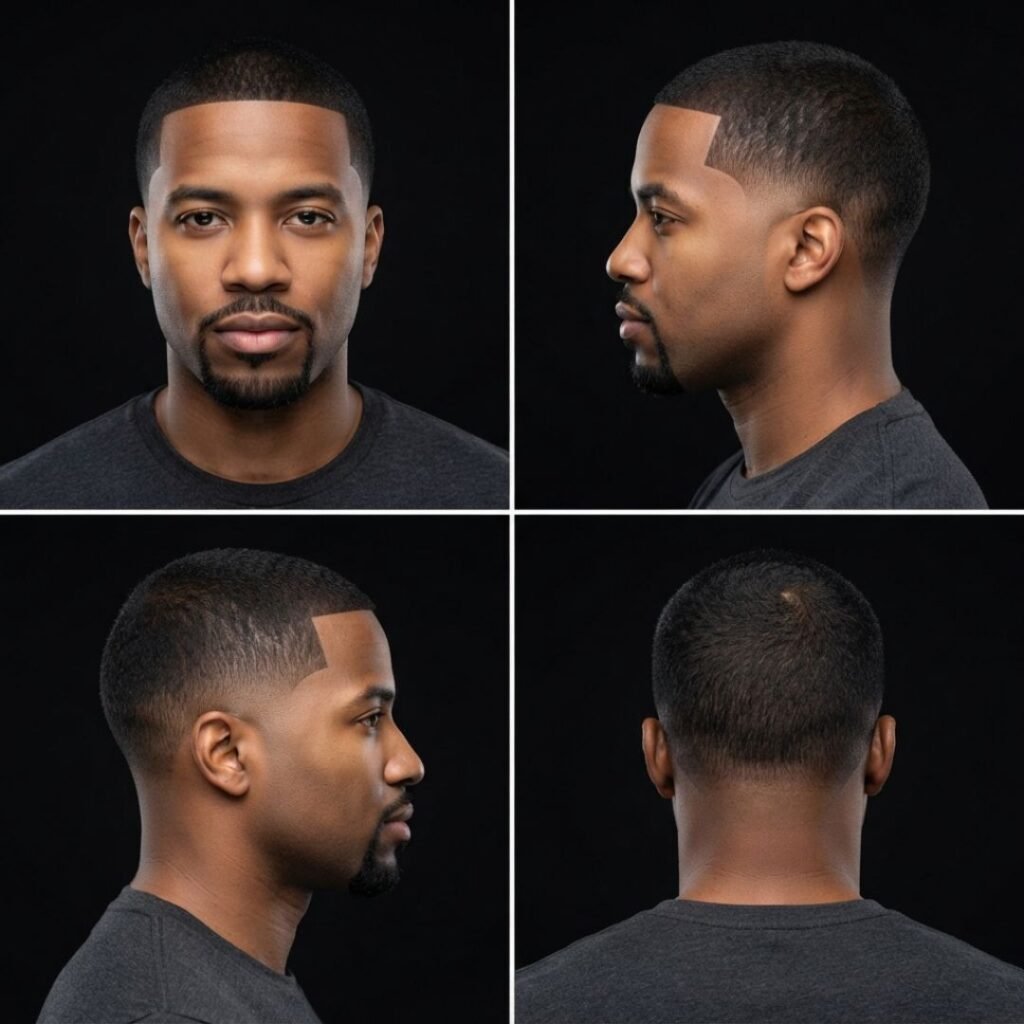
A buzz cut mid taper fade keeps the top at a uniform length while the sides fade down clean starting mid-head. This version suits guys who want zero styling time and a low-maintenance daily routine. Ask your barber for a #3 or #4 on top blended into a mid taper on the sides down to skin. Rub in a light moisturizer daily since buzzed hair can dry out fast without natural oil coverage.
Low Afro with Mid Taper Fade
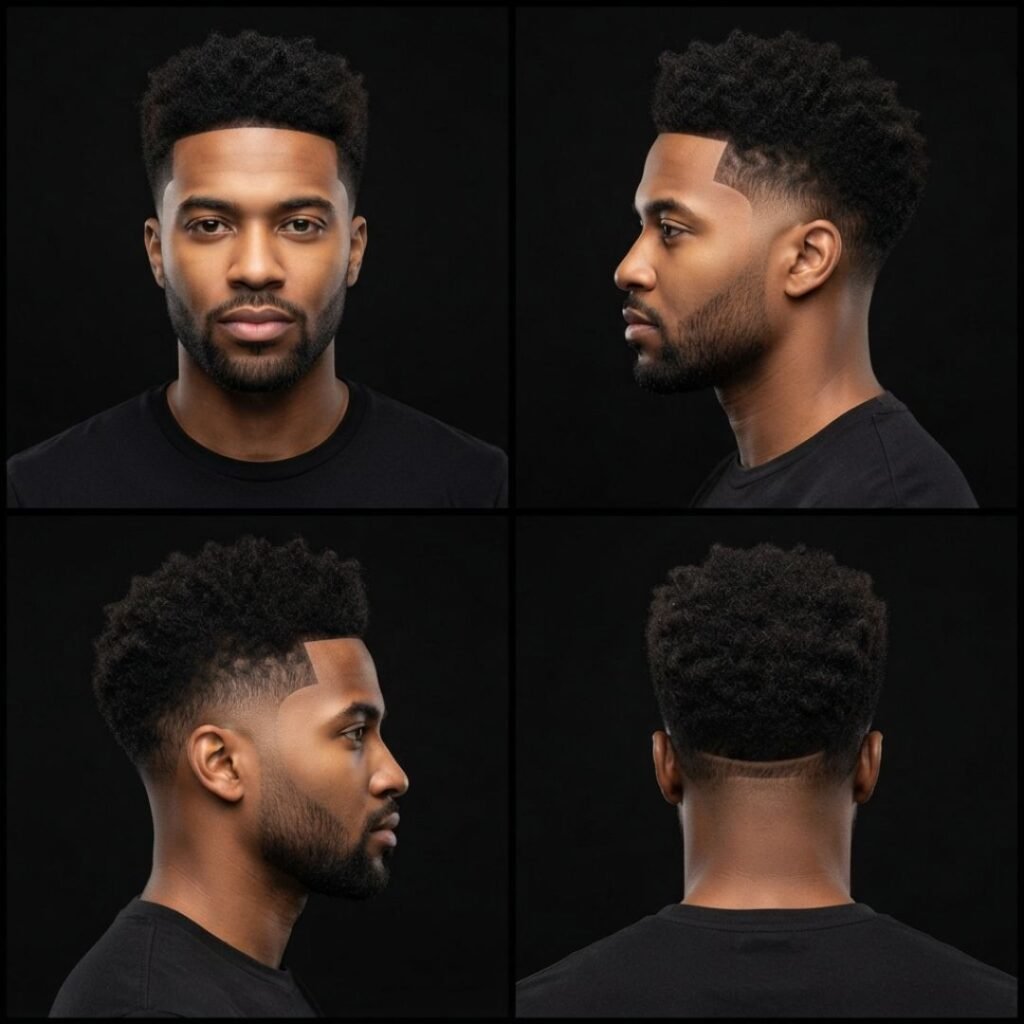
This style keeps a soft, rounded afro shape on top while the mid taper fade cleans up the sides and back. It works great for guys with rounder faces since the height adds a subtle vertical lift. Tell your barber to leave the top at about 1 to 1.5 inches and shape it into a rounded dome. A wide-tooth pick every morning keeps the shape even without flattening the curl pattern.
Textured Crop with Mid Taper Fade
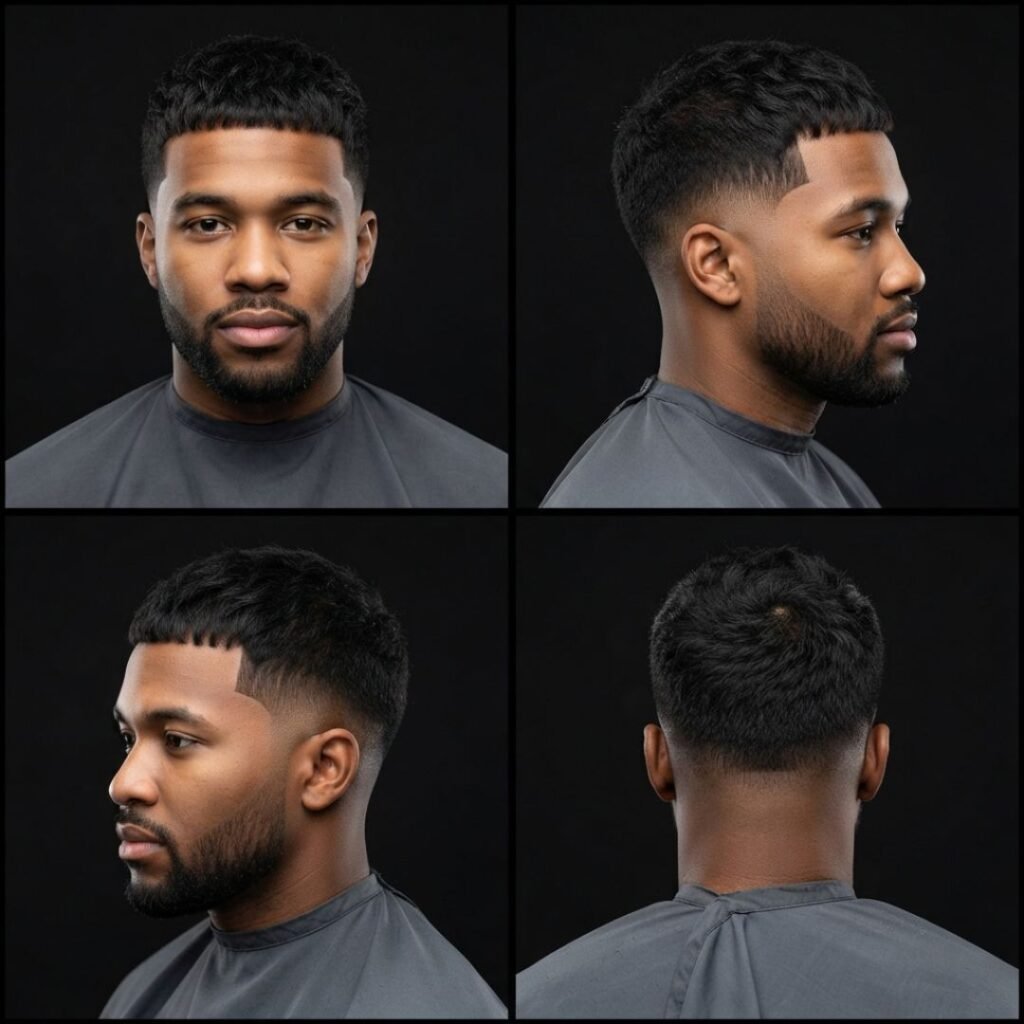
A textured crop mixes choppy, uneven layers on top with a clean mid taper fade underneath for contrast. This cut suits guys who want a slightly messy, modern look rather than something too polished. Barbers usually cut the top to 2 to 3 inches with point-cutting scissors, then blend a #2 fade at the sides. Use a matte texture paste, not gel, so the ends stay separated instead of clumping together.
French Crop with Mid Taper Fade
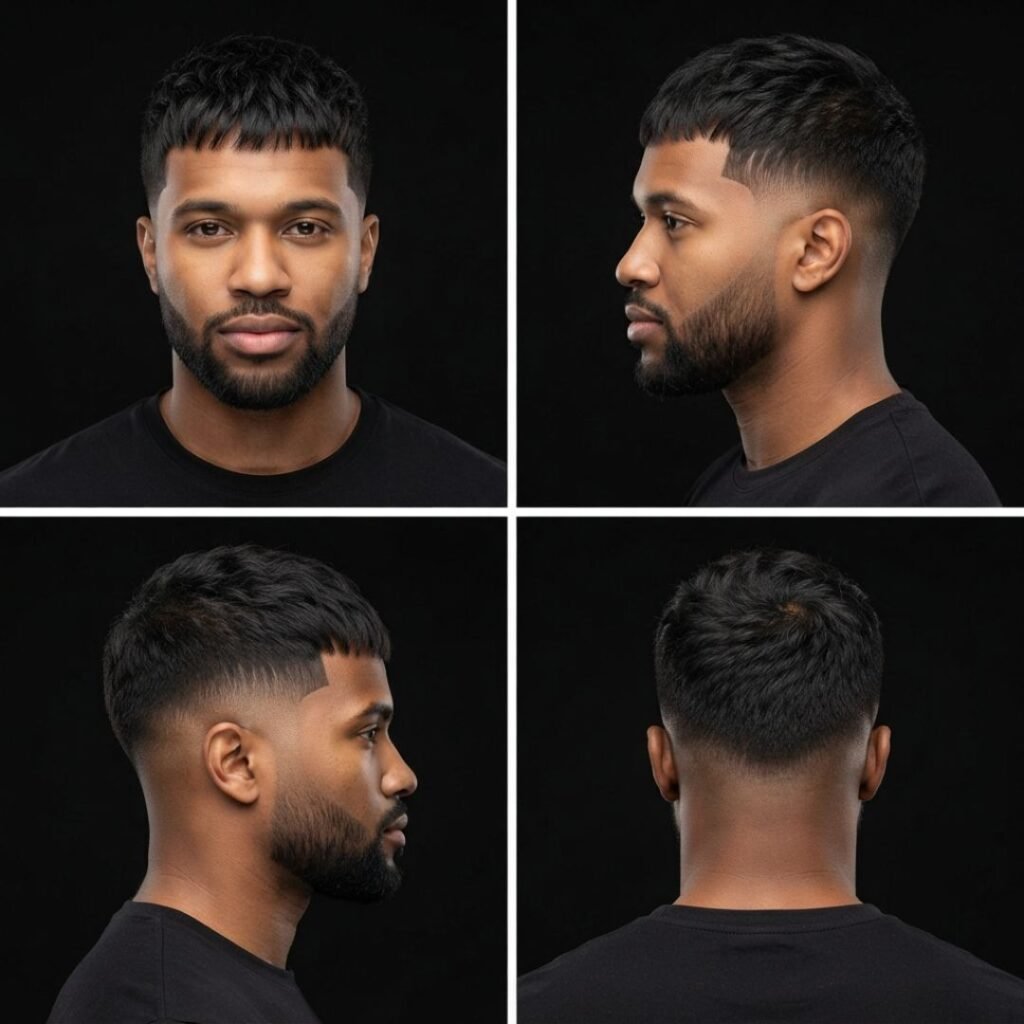
The French crop pairs a short, blunt fringe across the forehead with a mid taper fade that keeps the whole look tight and structured. This version works especially well for oval and square face shapes because the straight fringe line balances angular features. Your barber will cut the fringe to sit just above the eyebrows, usually at a #2 guard length before styling forward. Keep a small amount of pomade on hand to press the fringe flat if it starts lifting during the day.
Caesar Cut with Mid Taper Fade
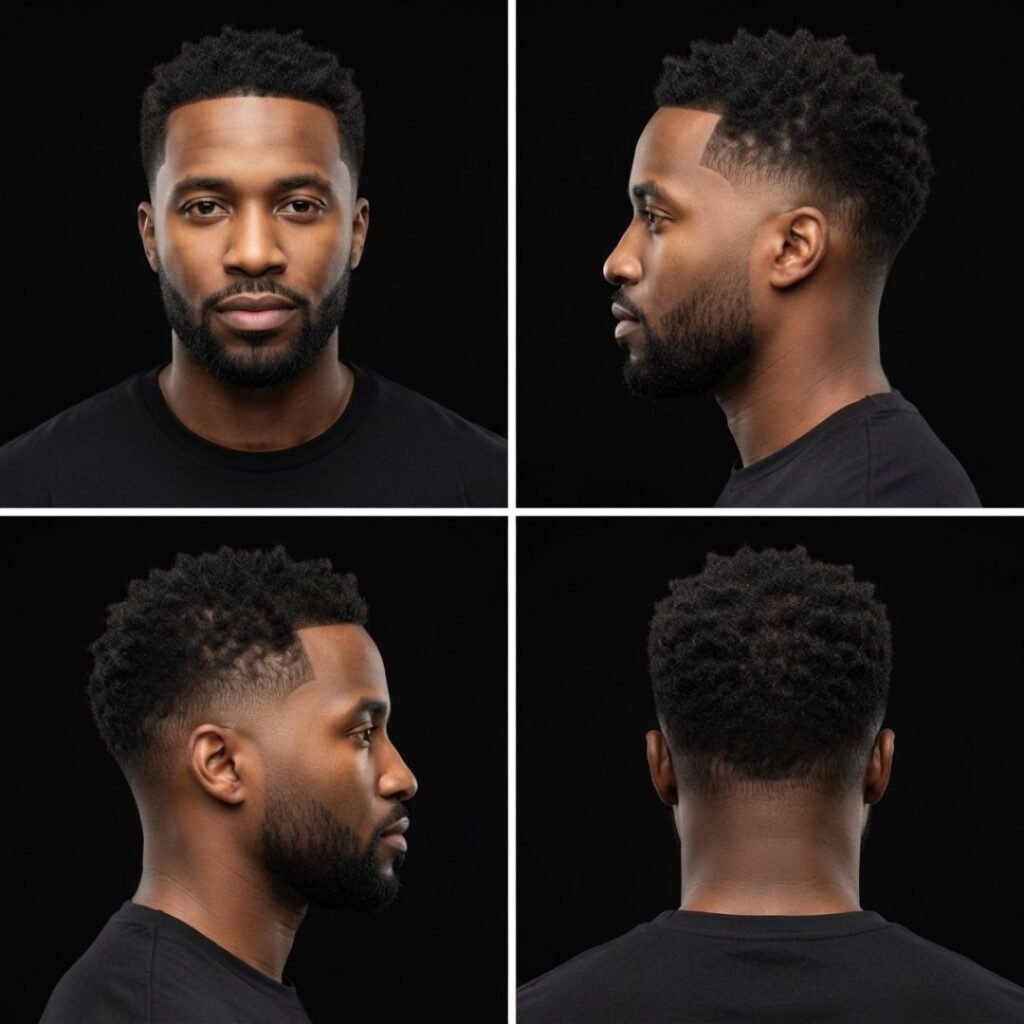
A Caesar cut mid taper fade combines short, forward-brushed hair on top with a clean fade at the sides, giving off a sharp, professional look. This style suits guys with receding hairlines since the forward direction of the hair helps disguise thinning at the temples. Barbers typically cut the top to about half an inch, using clippers over a comb, then taper down to skin around the mid-point. A dab of matte clay worked through damp hair keeps the forward direction locked in all day.
Crop Top Fade with Mid Taper
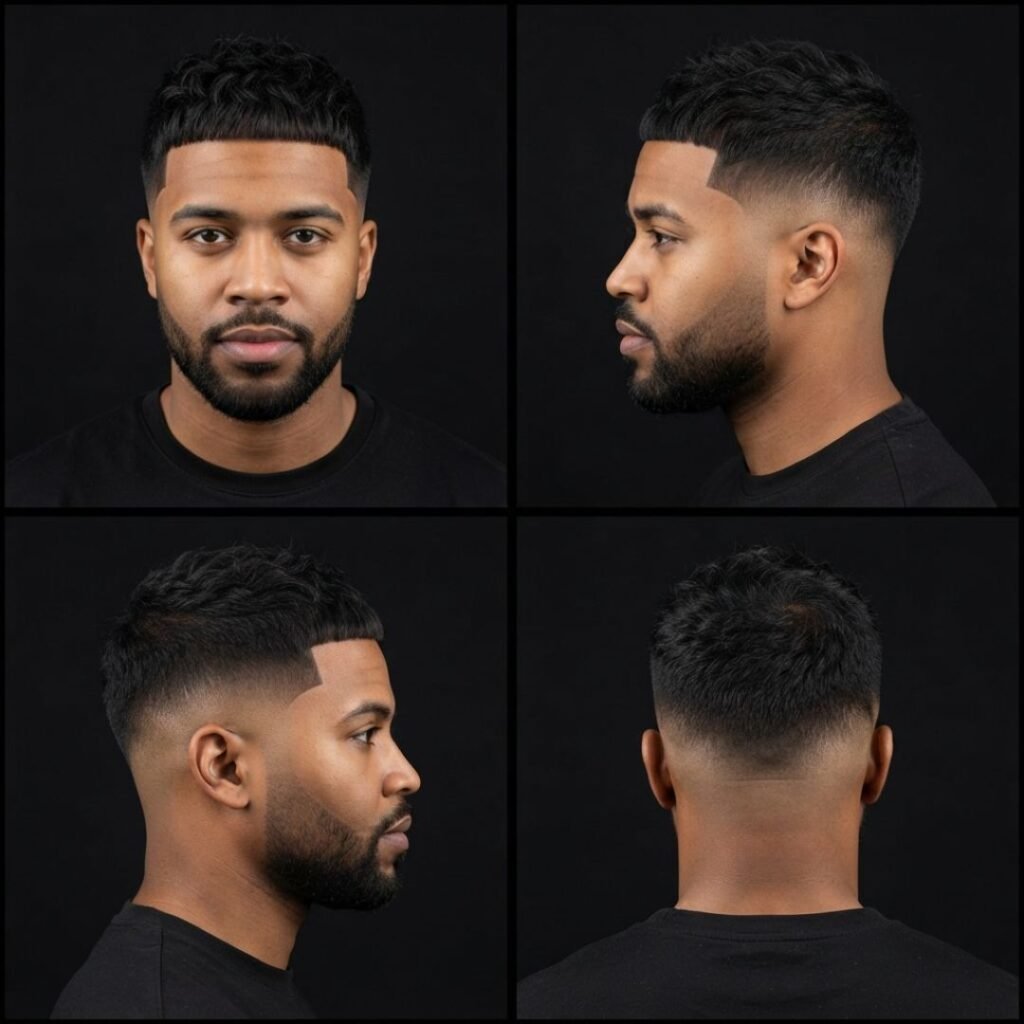
This style is a close cousin to the French crop but with a fuller, less structured fringe left longer on top. It works well for guys who want texture without a hard line across the forehead. Ask for the crown left at 2 to 2.5 inches with a mid taper starting just above the ear. Scrunch in a curl cream while hair is damp to bring out natural texture instead of brushing it flat.
360 Waves with Mid Taper Fade
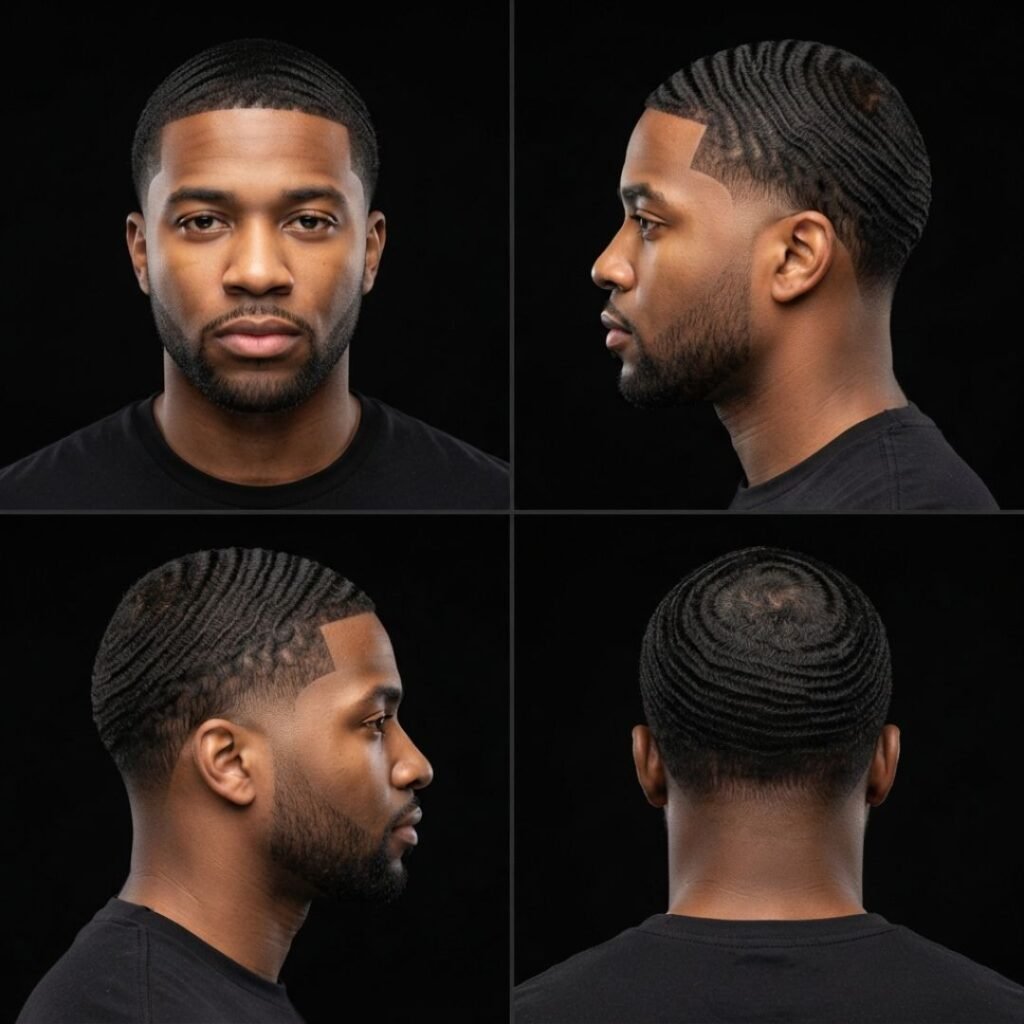
A 360 waves mid taper fade shows off a spinning wave pattern across the whole top of the head, cut short enough for the pattern to stay visible. This look is best for guys with wavy to straight hair textures who are willing to brush daily. Hair should be kept between a #1 and #1.5 on top for the waves to spin properly, fading into skin at the mid-side. Wear a durag at night and brush morning and night to keep the pattern spinning instead of frizzing out.
Side Part with Mid Taper Fade
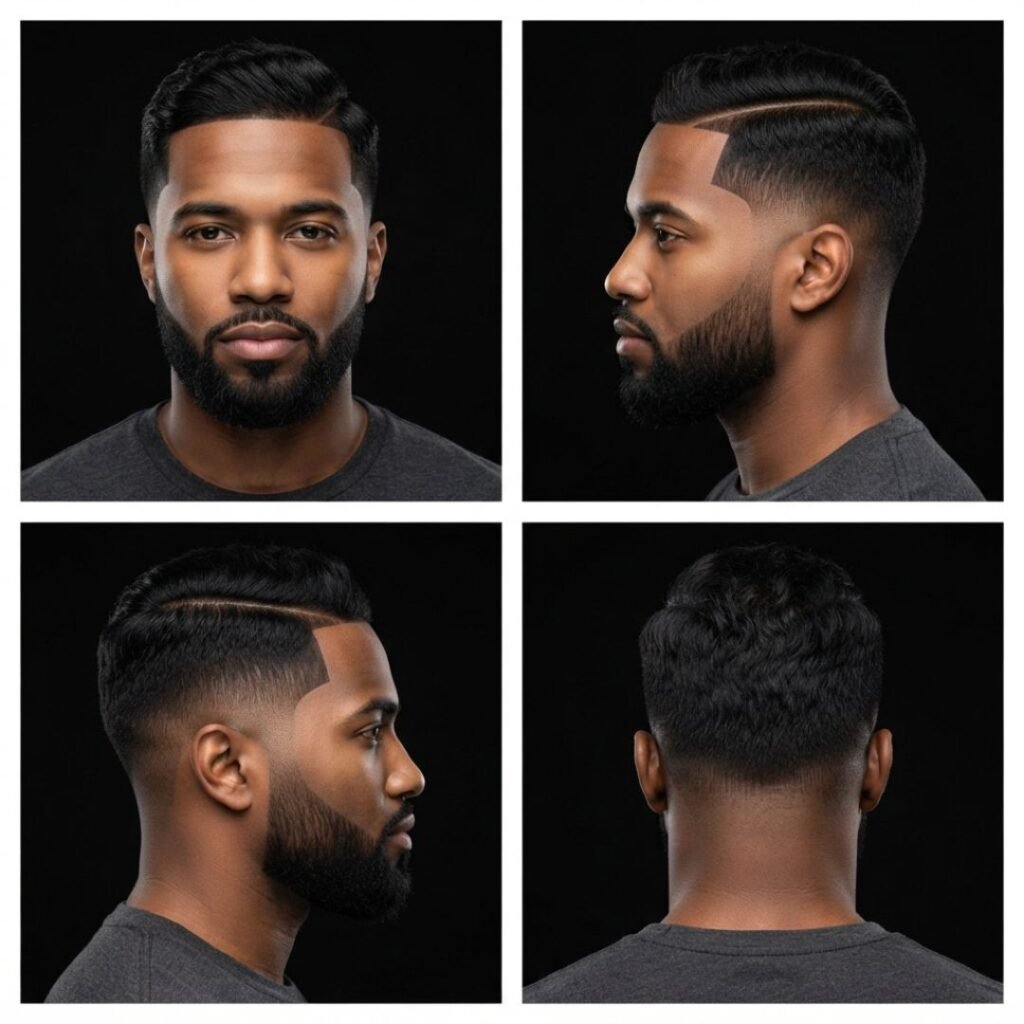
A side part mid taper fade adds a sharp, shaved or comb-created part line on one side of the head for a classic, put-together look. This works great for guys who want something dressy enough for work but still edgy at the sides. Barbers usually leave 2 to 3 inches on top and either shave a hard part line or comb one in with pomade. Reapply a light hold pomade midday if you’re in humid weather, since the part tends to soften and blend back in.
Afro Mid Taper Fade Styles for Black Men
Classic Afro with Mid Taper Fade
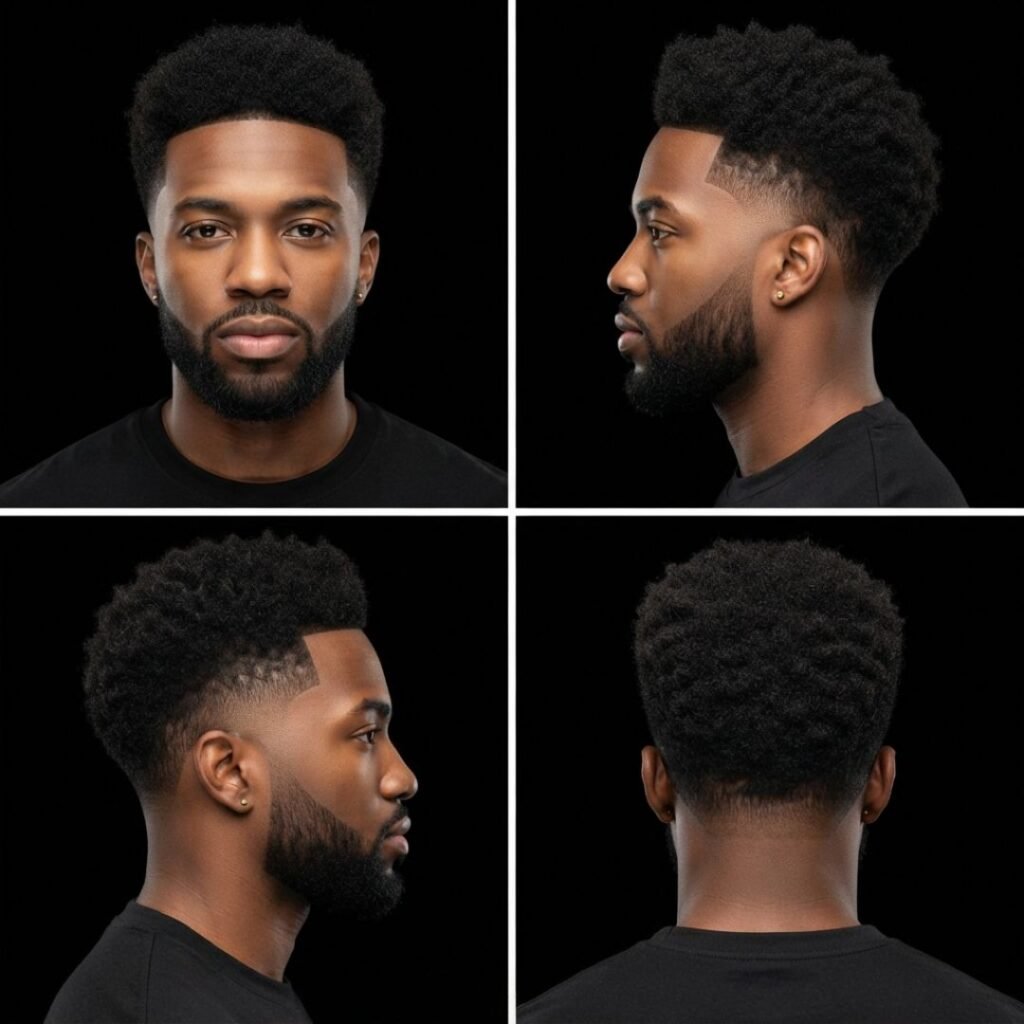
A classic afro mid taper fade keeps a full, rounded afro on top while the sides and back stay clean and controlled. This is one of the most requested combos because it balances a bold top with a groomed finish. Length on top usually runs from 2 to 4 inches depending on how full you want the shape, fading at a #2 mid-point. Pick the afro out daily with a wide-tooth comb and trim the fade every 2 weeks to keep the contrast sharp.
High Top Afro with Mid Taper Fade
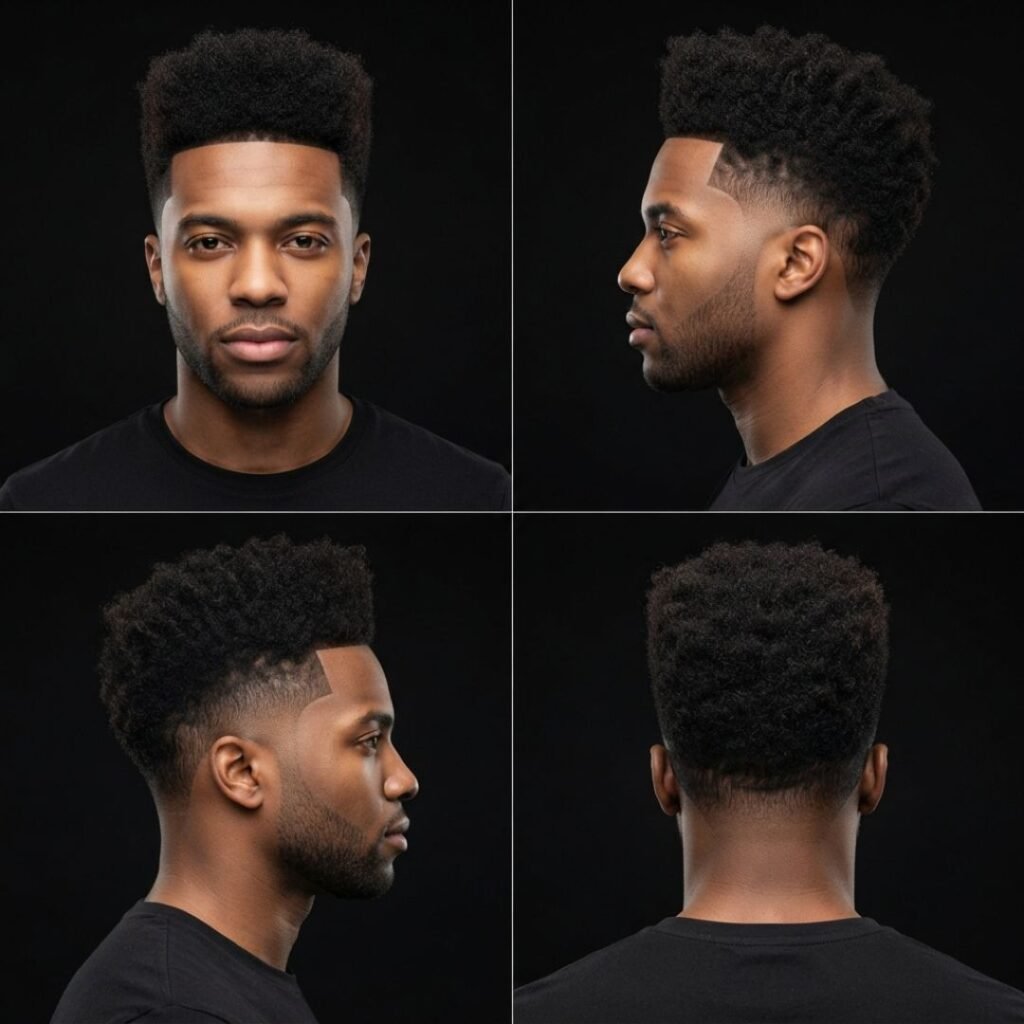
The high top afro is a taller, more squared-off version of the classic afro, paired here with a mid taper fade for a retro-meets-modern combo. This style suits guys with an oval or long face shape since the height adds visual weight up top. Barbers shape the crown flat and square using clippers over a pick, keeping the length around 3 to 4 inches. Use a strong hold afro spray to keep the squared shape from rounding out by midday.
Mini Afro with Mid Taper Fade
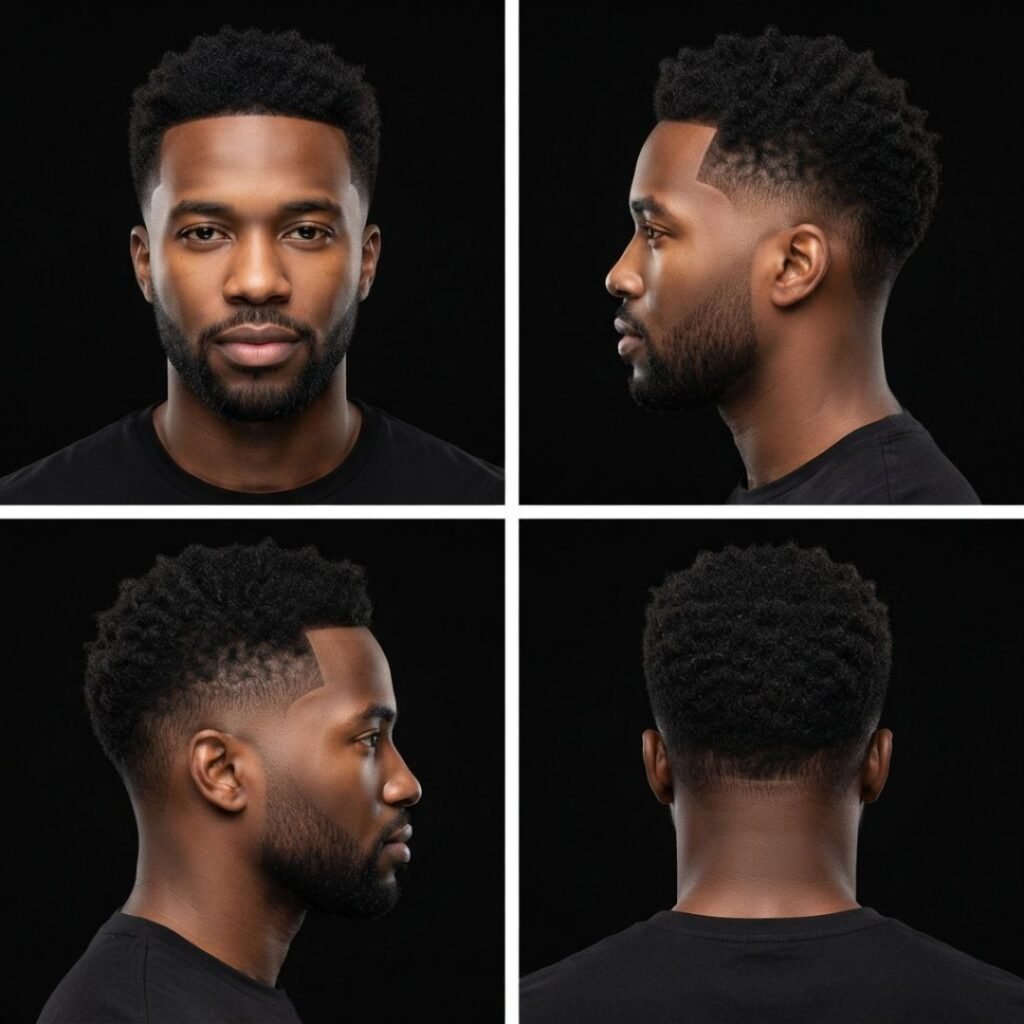
A mini afro mid taper fade keeps the top shorter and closer to the head, around 1 to 1.5 inches, for a cleaner everyday version of the afro look. This works well for guys who like the afro texture but don’t want the extra time picking it out each morning. Your barber will still fade the sides starting mid-head down to skin for contrast. A light curl butter rubbed in after a shower keeps the coils defined without weighing the shorter length down.
Sponged Afro with Mid Taper Fade
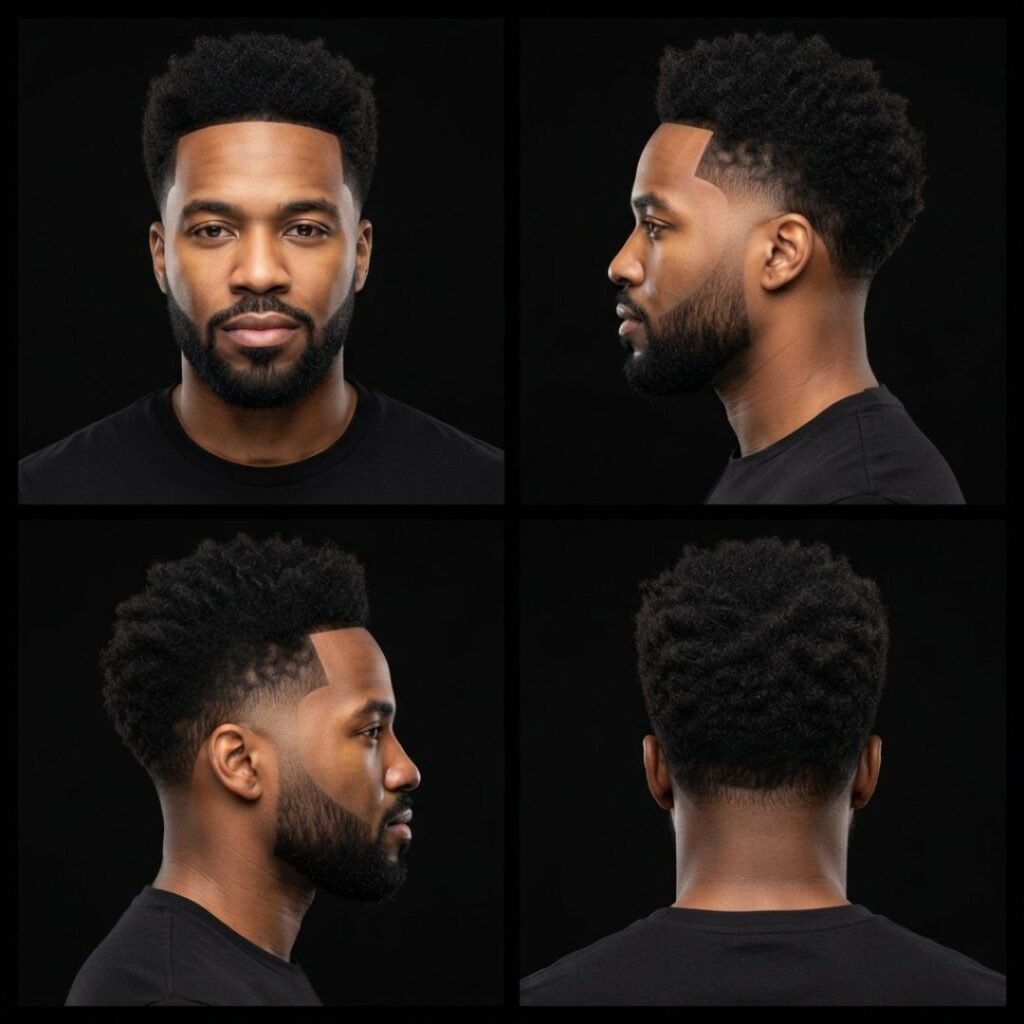
This style uses a curl sponge (also called a twist sponge) to create tight, uniform coils across the top instead of a natural loose afro. It’s a great option for guys with looser curl patterns who want the coily look without waiting for their natural texture to change. Top length works best between 1 and 2 inches so the sponge can grab and twist the hair effectively. Sponge in small circular motions for 5 to 10 minutes after washing, then let it air dry before touching it.
Afro Hawk (FroHawk) with Mid Taper Fade
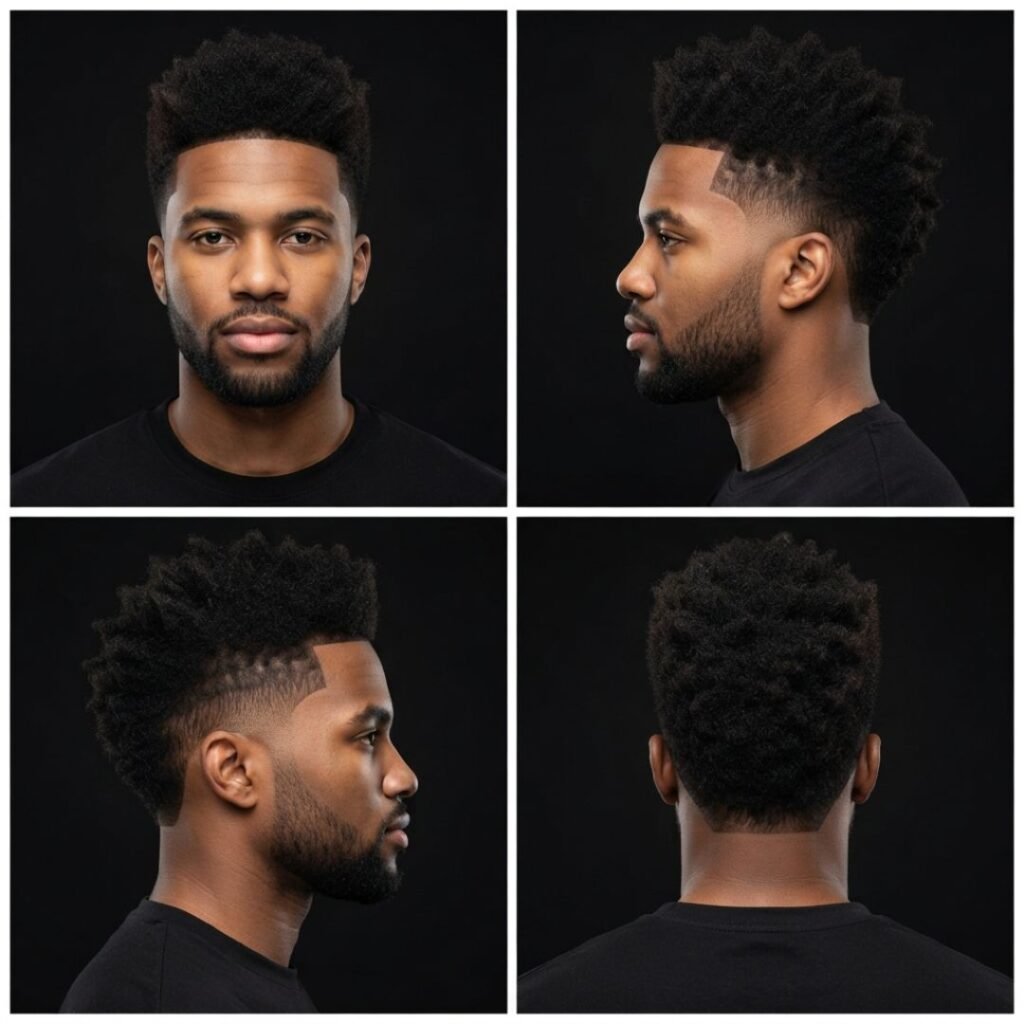
A frohawk keeps a strip of longer afro hair down the center of the head while both sides fade down using a mid taper, similar to a mohawk shape but with curl texture. This bold look suits confident guys who don’t mind standing out in a crowd. Barbers usually leave the center strip at 2 to 3 inches wide and the same in length, fading everything else starting mid-side. Twist or pick the center strip daily and touch up the fade every 10 to 14 days since the contrast shows growth fast.
Blowout Afro with Mid Taper Fade
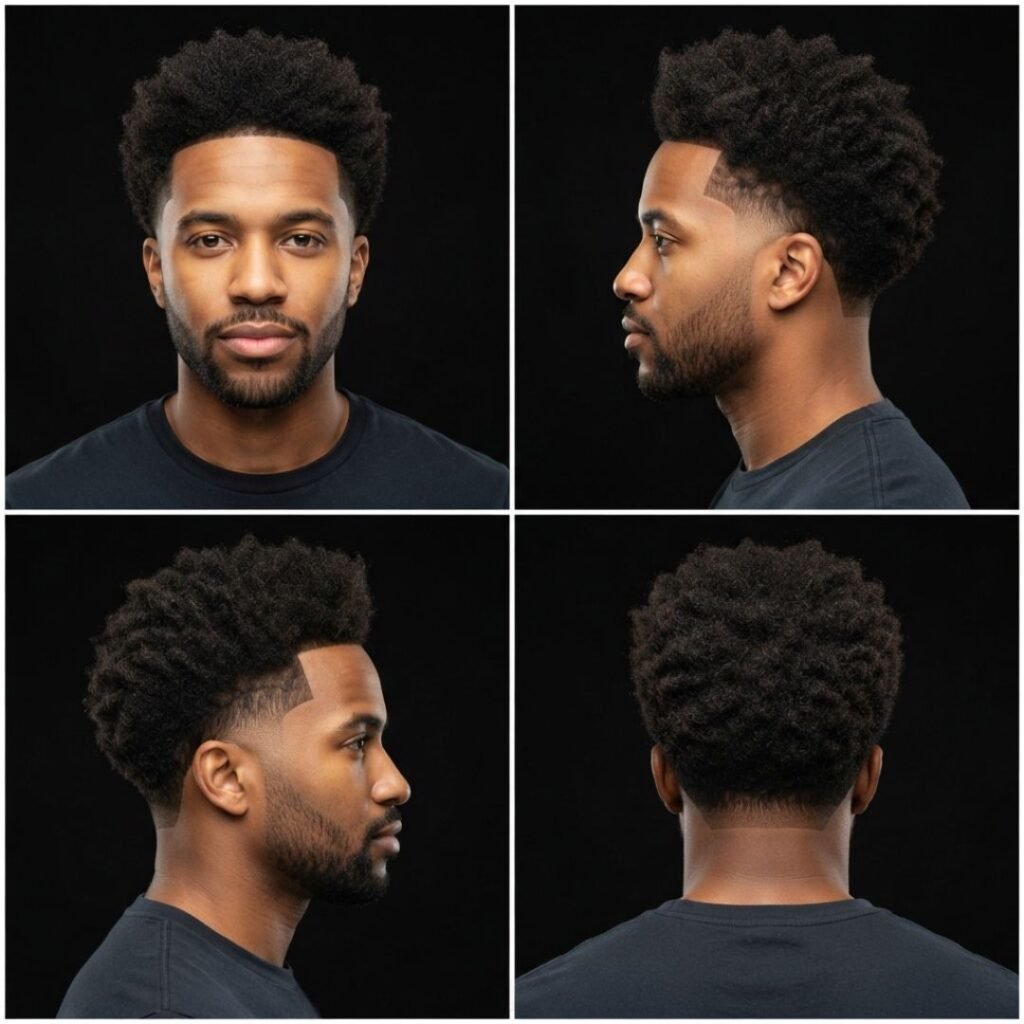
A blowout afro mixes a rounded, symmetrical afro shape with a mid taper fade that creates a sharp visual “halo” effect around the head. This style is popular for special occasions and portrait-style photos because of how clean the shape looks. Barbers typically leave 3 to 5 inches on top, using a blow dryer with a pick attachment to round the shape before fading the sides. Set an appointment specifically labeled a “blowout” since it takes longer and often costs $10 to $15 more than a standard afro trim.
Afro with Edge-Up and Mid Taper
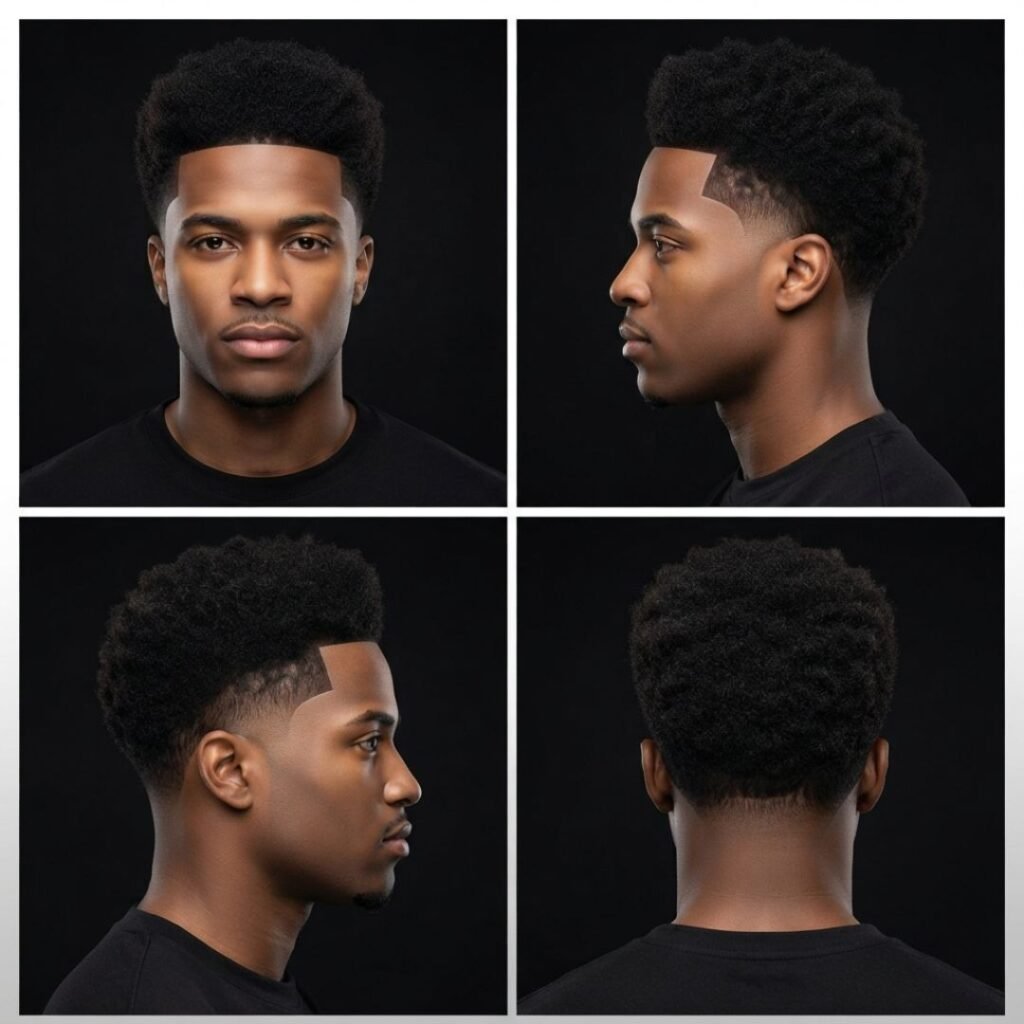
This version pairs a natural or shaped afro on top with a razor-sharp edge-up along the hairline, combined with a mid taper fade at the sides. It’s ideal for guys who want maximum definition around the face without cutting the top shorter. Barbers use a straight razor or T-liner to define the hairline before blending the sides starting mid-head. Get the edge-up refreshed every 7 to 10 days since hairline growth shows faster than fade growth.
Short Afro with Beard and Mid Taper Fade
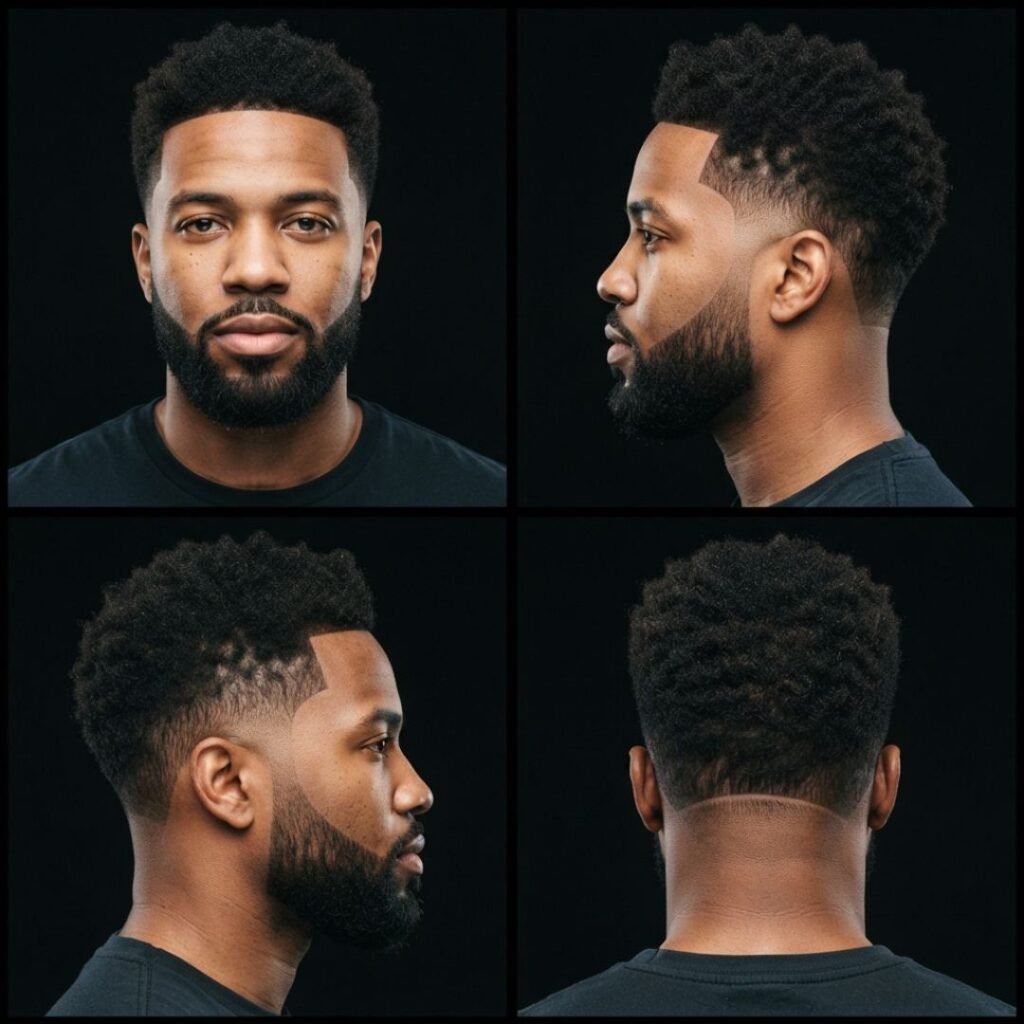
A short afro paired with a full beard and mid taper fade creates a balanced, mature look that works in almost any professional setting. This combo suits guys who want facial hair to be the main focus rather than the haircut. Keep the top around 1.5 to 2 inches and let the beard grow to at least half an inch before shaping it alongside the fade. Trim the beard and fade together every visit so the two blend instead of looking like separate styles.
Curly and Textured Top Mid Taper Fades
Defined Curls with Mid Taper Fade
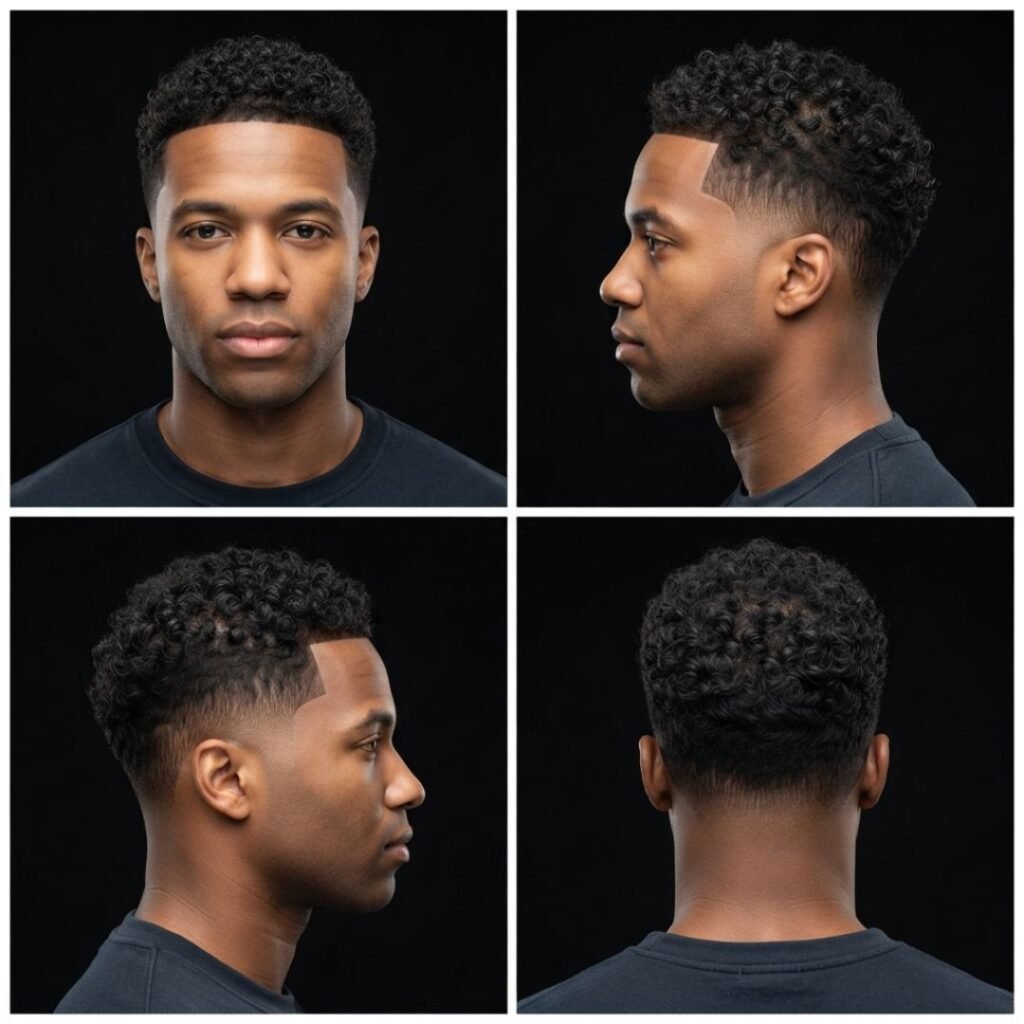
This style focuses on separating and defining each individual curl on top rather than leaving hair in a natural afro puff, paired with a mid taper fade for contrast. It works best on 3A to 3C curl patterns that hold a curl shape naturally with the right product. Top length usually sits between 2 and 4 inches to give curls enough room to form a visible spiral. Use a curl cream on soaking wet hair and let it air dry, since heat or towel-drying breaks up curl definition fast.
Finger Coils with Mid Taper Fade
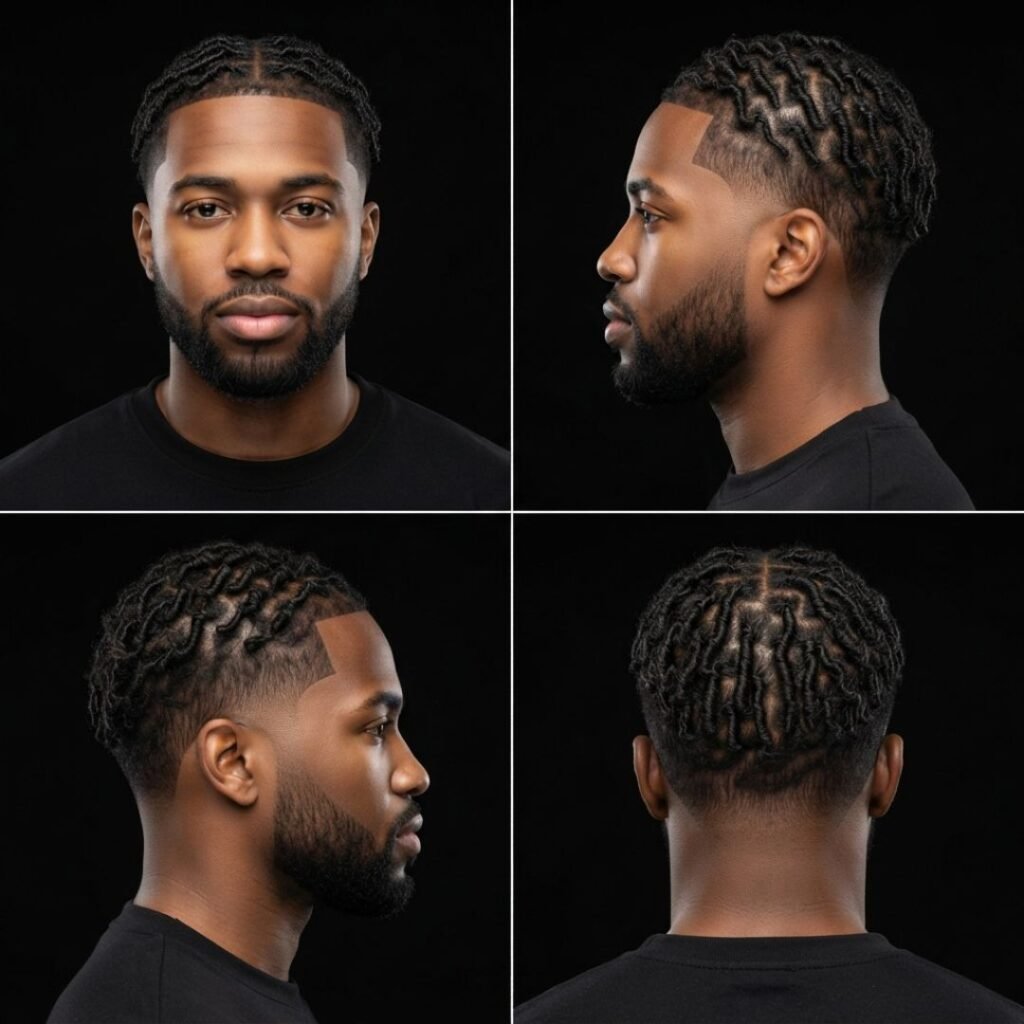
Finger coils are hand-twisted, tight individual coils formed section by section across the top, paired here with a mid taper fade underneath. This look suits guys transitioning to locs or anyone who wants a neat, uniform coily texture. Hair needs to be at least 1.5 to 2 inches long for a barber or stylist to twist each section properly. Re-twist every 5 to 7 days as new growth loosens the coil shape near the roots.
Twist-Out with Mid Taper Fade
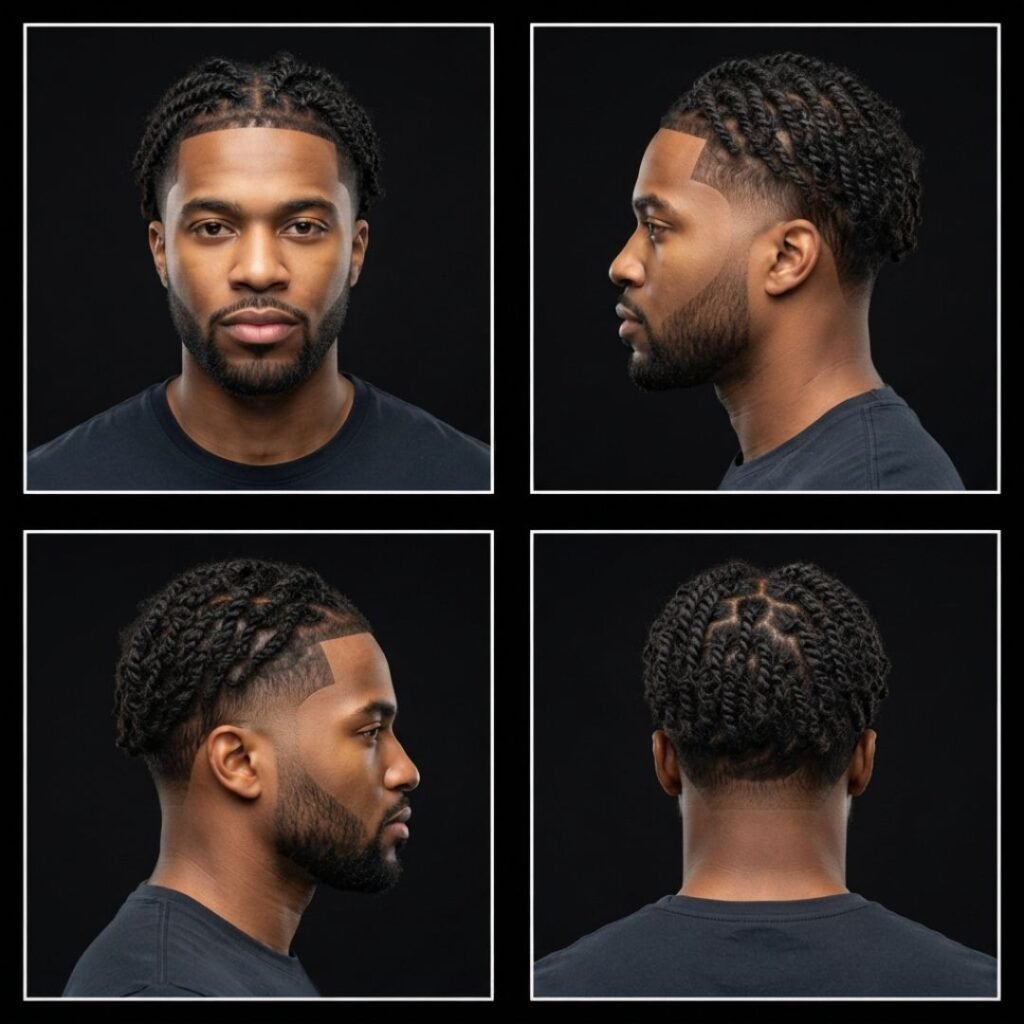
A twist-out mid taper fade takes two-strand twists, lets them set, then unravels them to leave a wavy, defined curl pattern on top. This is a great low-manipulation style for guys wanting texture without daily heat or heavy product. Twists usually need to set for 6 to 8 hours or overnight before unraveling for the best pattern. Sleep on a satin pillowcase to protect the twist-out from frizzing overnight.
Curly Pompadour with Mid Taper Fade
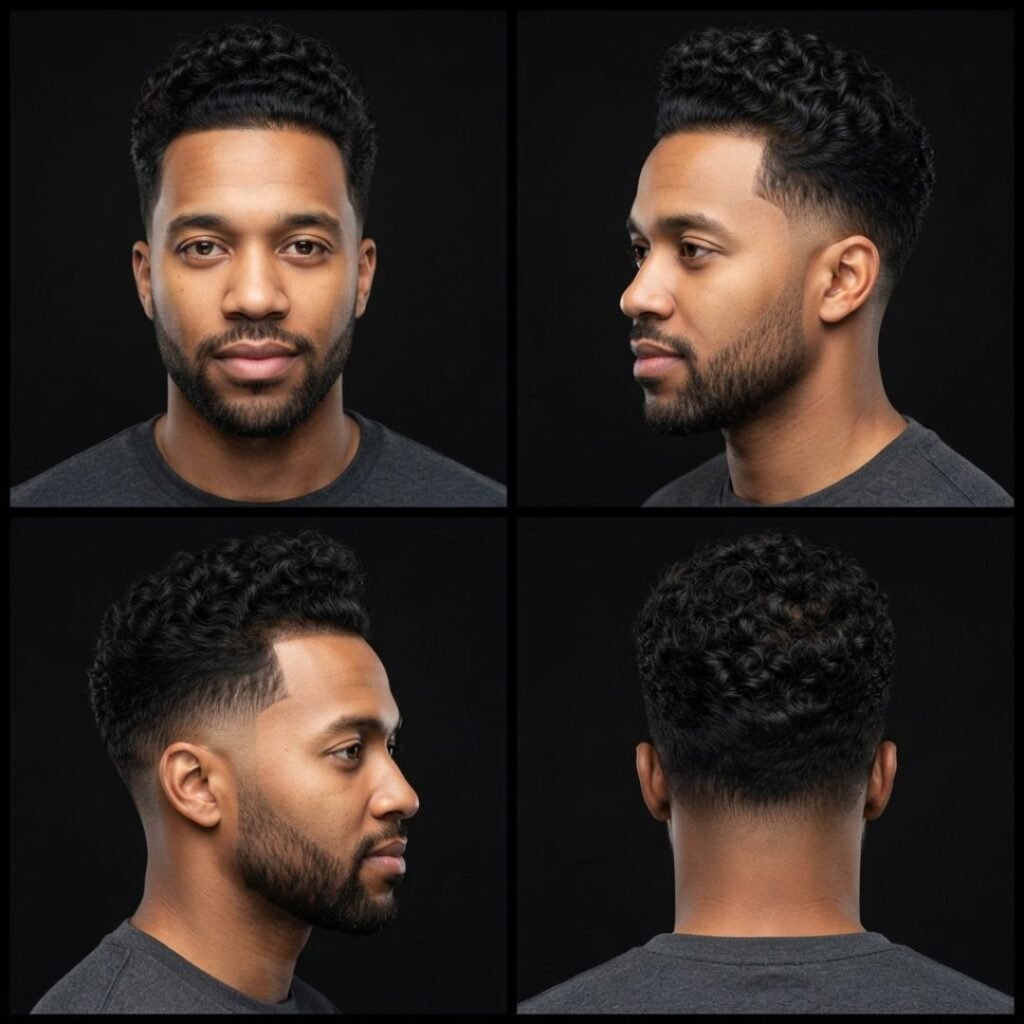
A curly pompadour takes the classic pompadour shape — swept up and back — but keeps the natural curl pattern instead of flattening it with heat, combined with a mid taper fade. This works especially well for guys with oval or square faces since the height balances a wider jawline. Top length needs to be at least 3 to 4 inches for enough curl to sweep back and hold. Blow dry with a diffuser attachment on low heat, then set with a light-hold curl mousse before the pomp cools.
Quiff with Mid Taper Fade
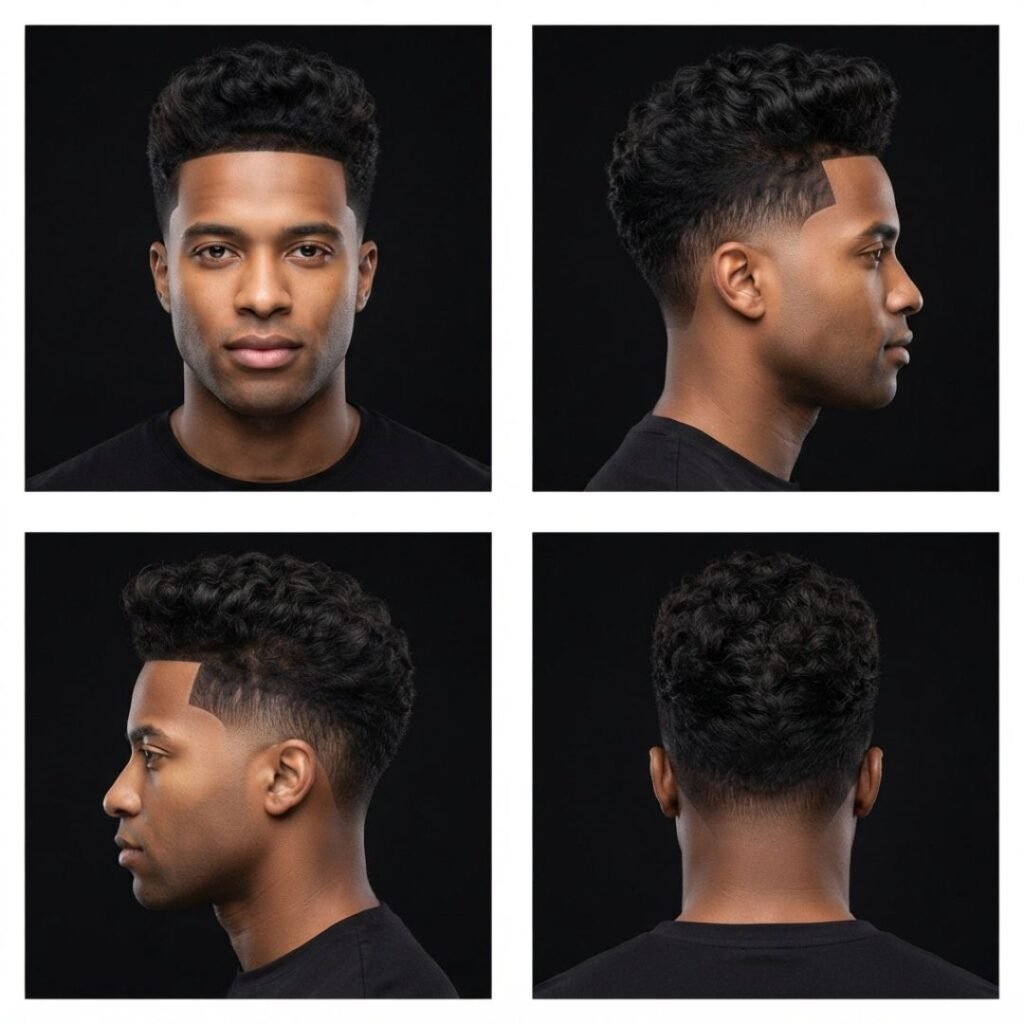
A quiff mid taper fade pushes the top hair up and slightly forward at the front, creating volume without the fully backward sweep of a pompadour. This suits guys who want a shorter styling routine but still like some height. Barbers usually cut the top to 2 to 3 inches with more length concentrated at the front hairline. Use a small amount of matte paste worked from the roots up to build volume before pushing hair forward.
Sponge Twists with Mid Taper Fade
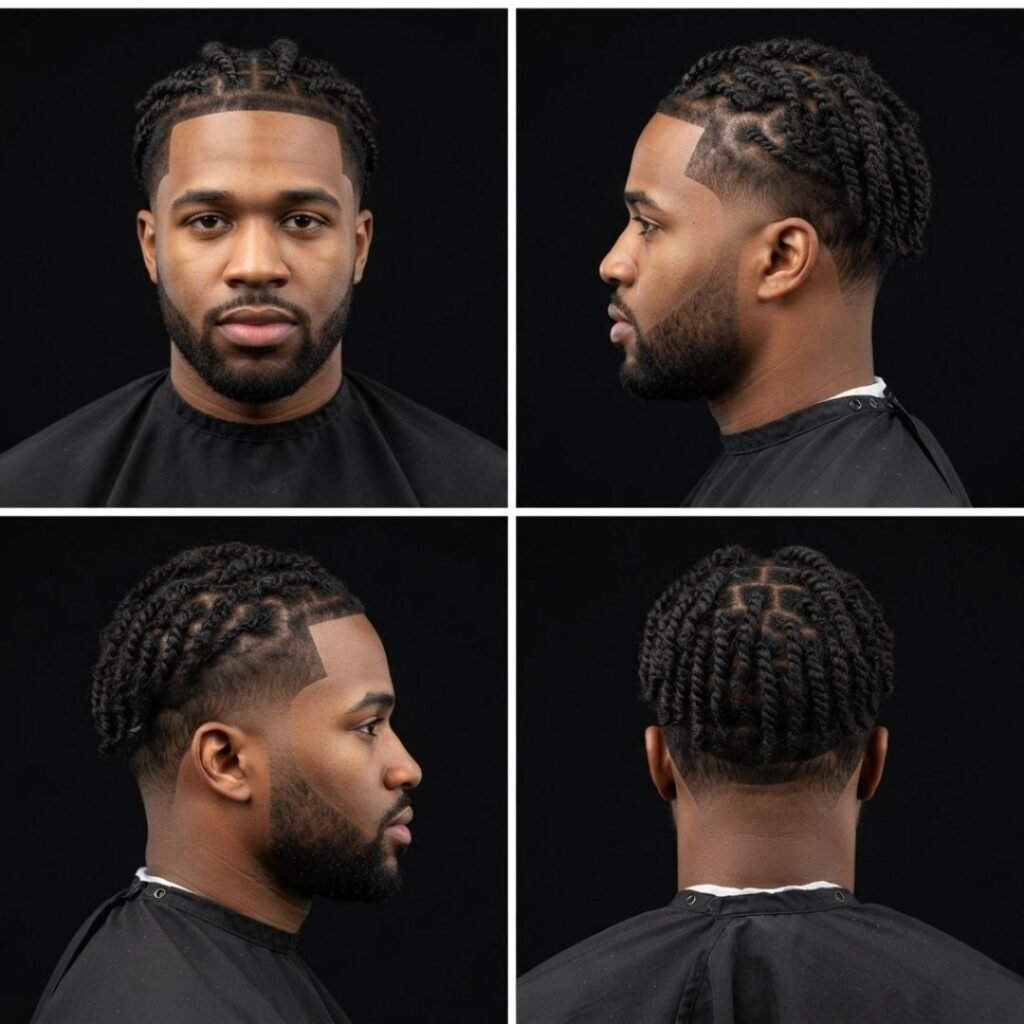
Sponge twists use a twist sponge to create smaller, tighter twist patterns than a curl sponge, giving a more defined rope-like texture on top, paired with a mid taper fade. This style suits guys with shorter natural hair who still want visible texture without growing hair out. Top length works well between 1 and 2 inches for the sponge to catch and twist properly. Apply a light oil before sponging to prevent the sponge from pulling or breaking curl strands.
Long Hair and Protective Style Mid Taper Fades
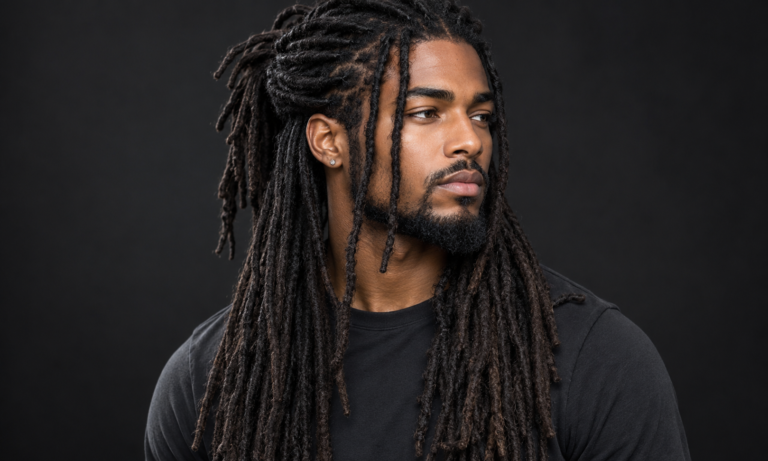
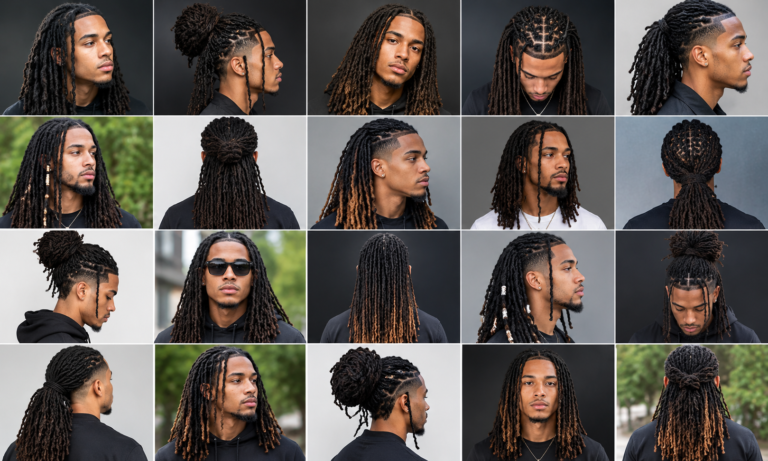
Dreadlocks / Locs with Mid Taper Fade
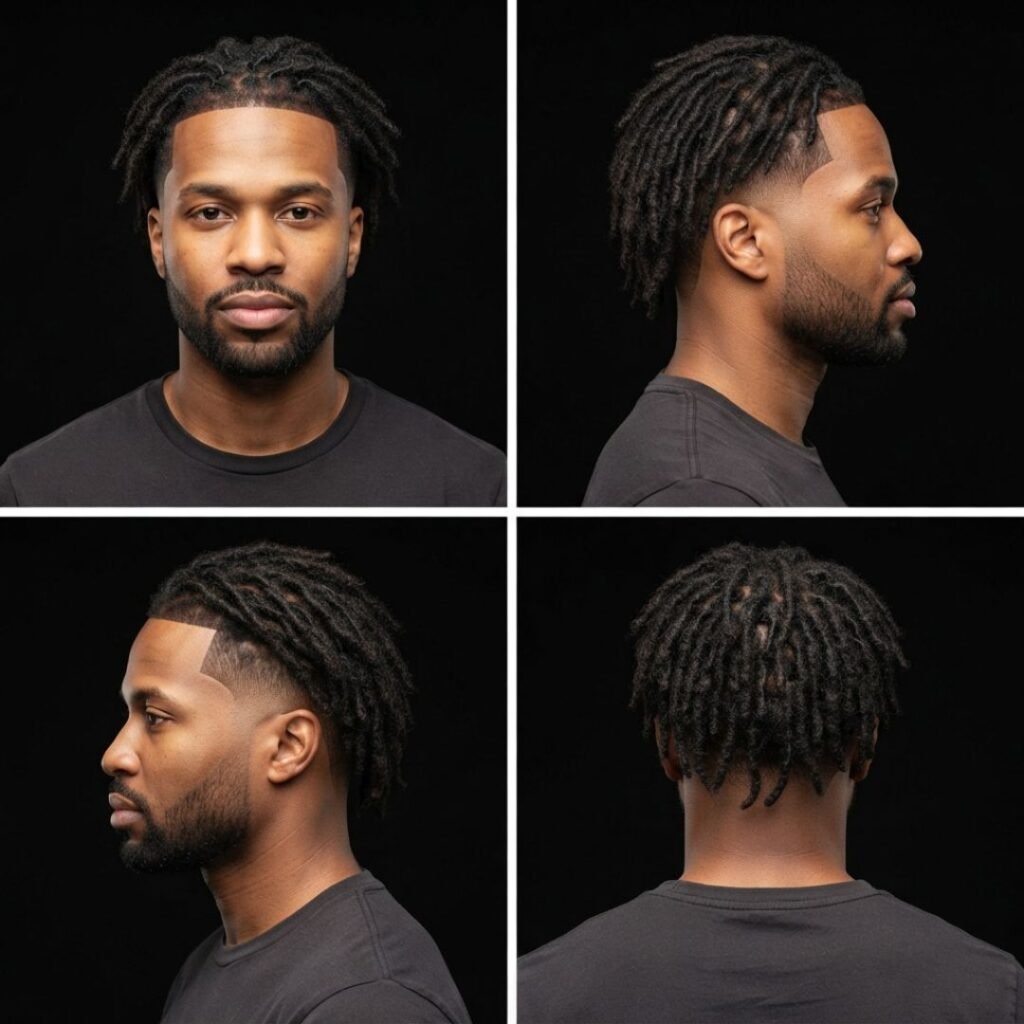
Locs with a mid taper fade keep the top hair in its natural locked state while the sides and back stay tapered and clean, creating sharp contrast between texture and precision. This combo works at any loc length, from starter locs to shoulder-length mature locs. Barbers fade around the base of the locs carefully, usually starting the taper mid-head to avoid cutting into the loc roots. Get the fade refreshed every 2 to 3 weeks while retwisting the locs on your normal separate schedule.
Loc Bun with Mid Taper Fade
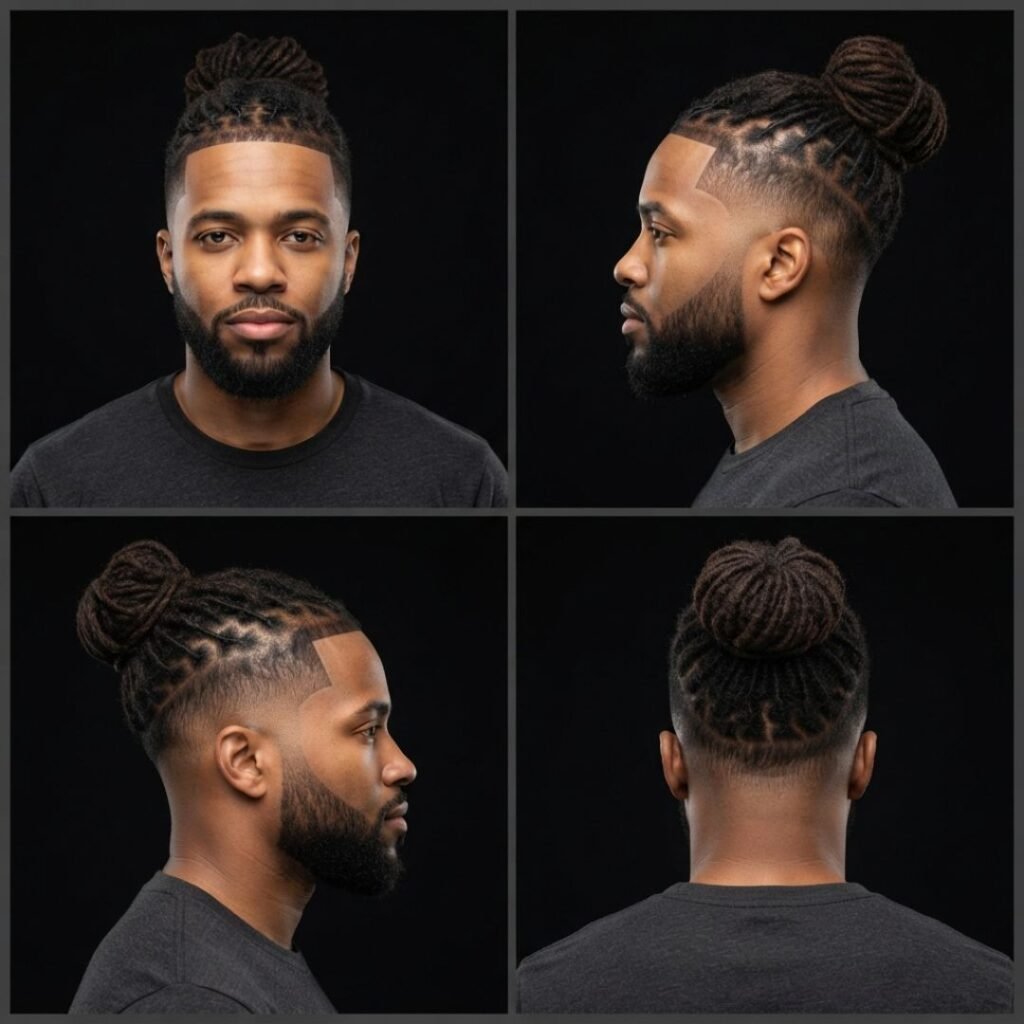
A loc bun gathers longer locs up into a bun or top-knot while the sides stay faded and low-maintenance underneath. This style is ideal for guys with longer locs who want a clean, pulled-back option for work or gym days. Locs generally need to reach at least shoulder length before they gather into a secure bun shape. Use a loc-safe hair tie, never a rubber band, since rubber bands cause breakage at the base over time.
Box Braids with Mid Taper Fade
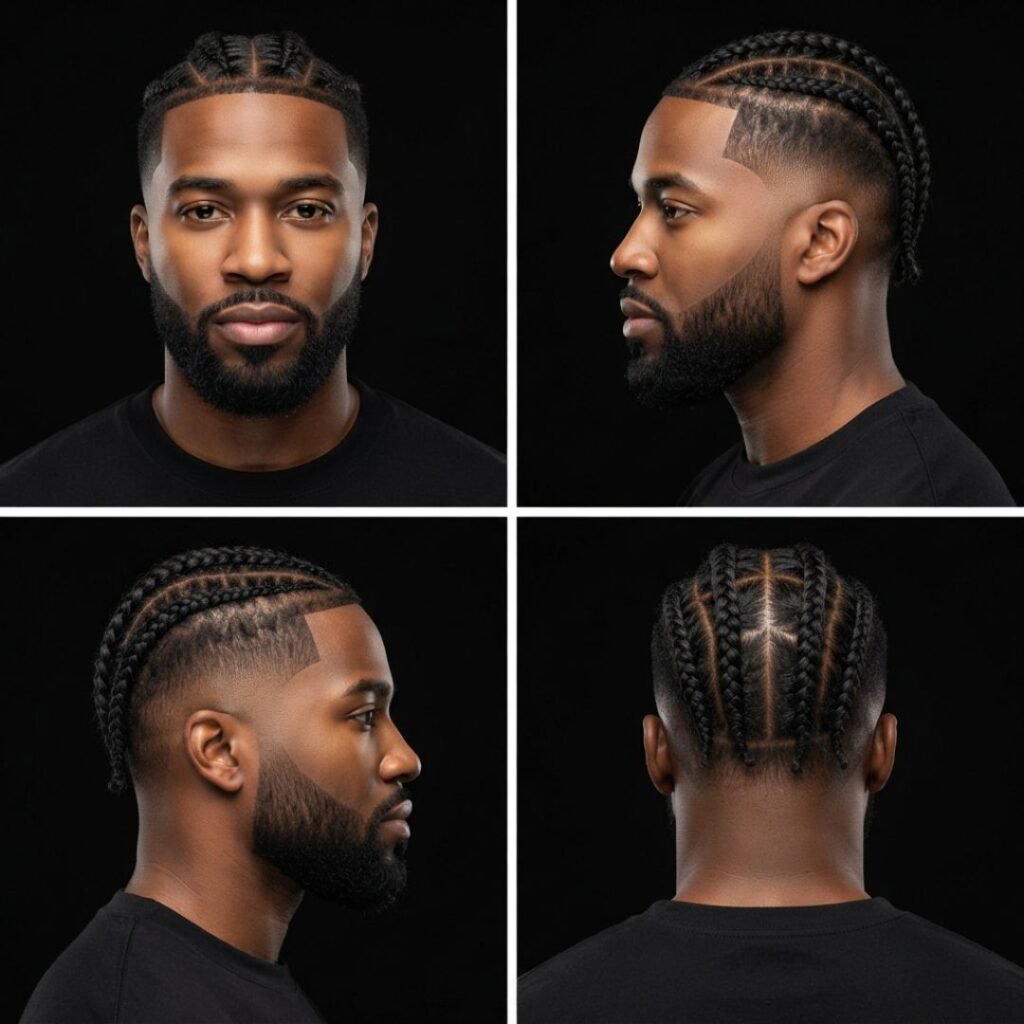
Box braids paired with a mid taper fade keep the sides sharp while the top and crown carry neat, sectioned braids of even size. This protective style works well for guys wanting length without daily manipulation of their natural hair. Braids typically last 4 to 8 weeks depending on hair growth and how well the edges are maintained. Cover braids with a satin bonnet at night and moisturize the scalp every 2 to 3 days to avoid dryness and itching.
Feed-In Braids with Mid Taper Fade
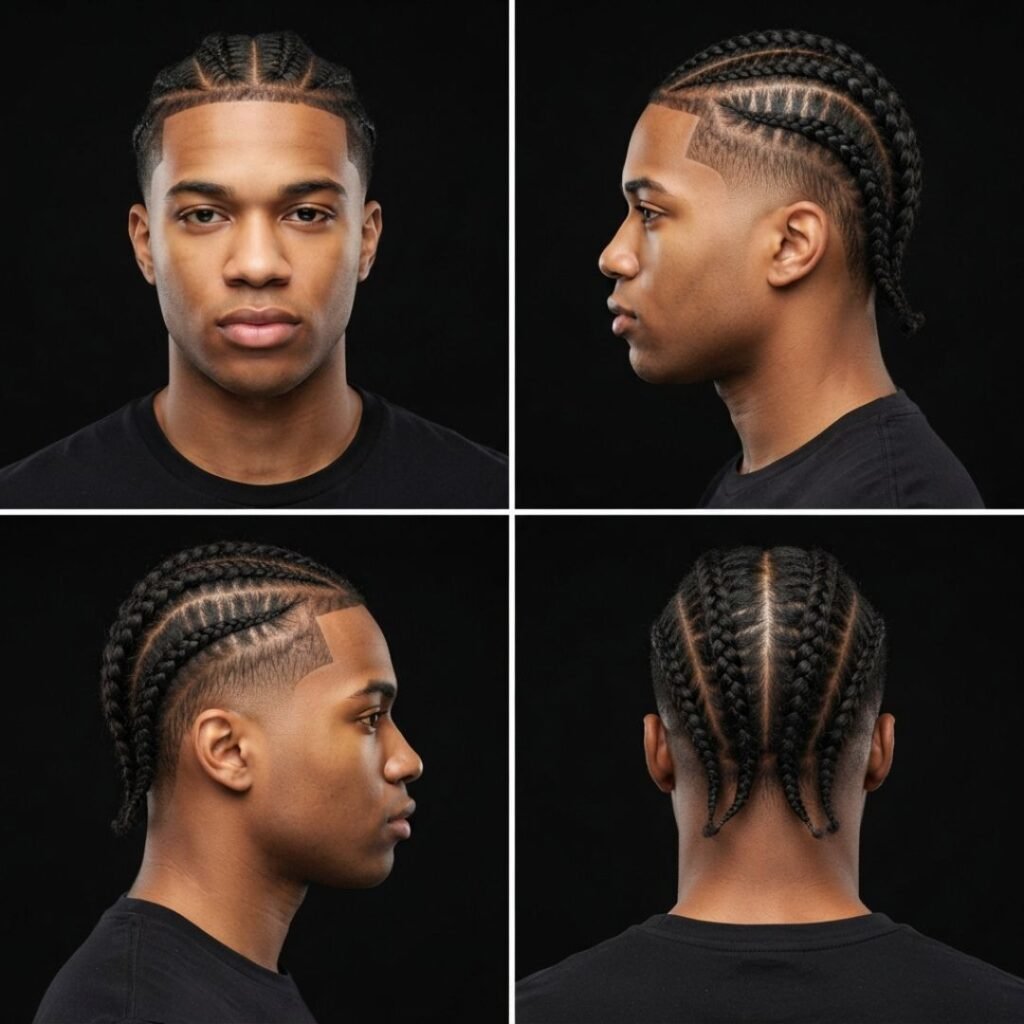
Feed-in braids start small at the hairline and gradually add more hair as they braid back, creating a smoother, more natural-looking braid than standard box braids, combined with a mid taper fade. This style suits guys who want braids that lay flatter against the scalp. The technique needs skilled hands, so expect this style to take 2 to 4 hours depending on braid count and length. Book a touch-up on the hairline area every 3 to 4 weeks since that section grows out and loosens first.
Cornrows with Mid Taper Fade
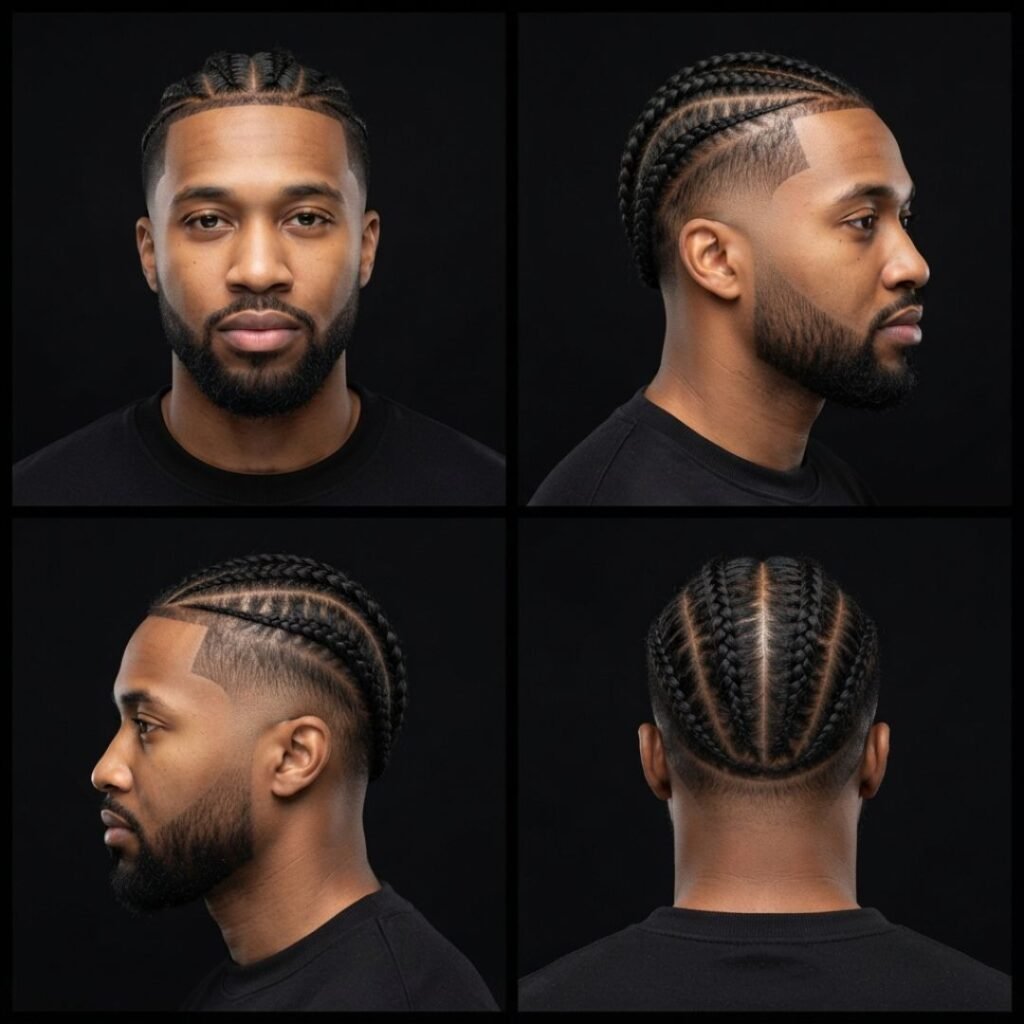
Cornrows with a mid taper fade keep braids flat against the scalp in straight or curved rows while the sides stay tapered for contrast. This protective style works for almost any hair length as long as there’s enough hair to grip and braid. Cornrows typically last 2 to 3 weeks before needing a re-braid as new growth appears at the part lines. Apply a light oil to the scalp every other day to prevent flaking and dryness between braiding sessions.
Man Bun with Mid Taper Fade
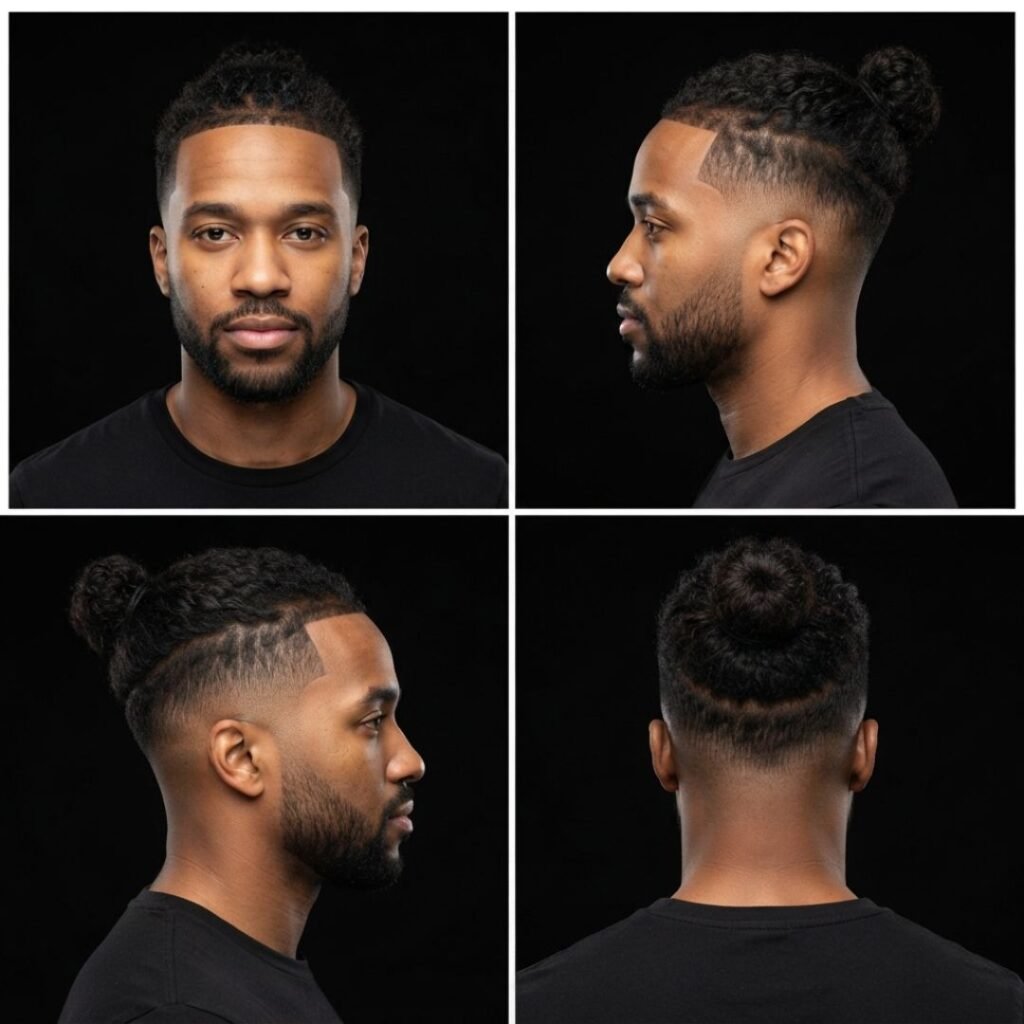
A man bun mid taper fade pulls longer top hair back into a bun while the sides stay faded short for contrast between length and precision. This style needs at least 4 to 6 inches of hair on top to gather securely into a bun shape. It works best for guys with straighter or wavier textures since coilier hair may need extra product to smooth into the bun. Use an elastic-free wrap tie to avoid creasing or snapping strands at the base of the bun.
Rope Twists with Mid Taper Fade
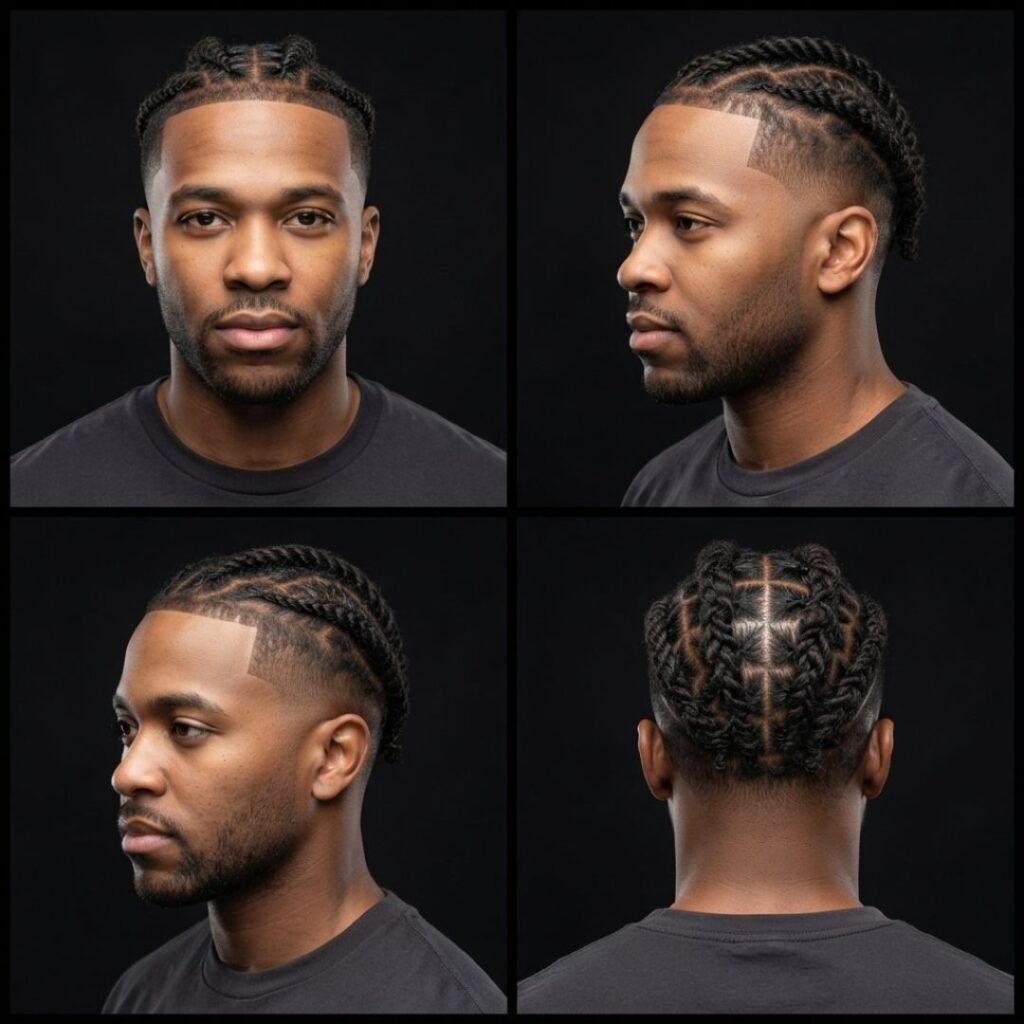
Rope twists combine two twisted sections wrapped around each other to form a thicker, rope-like strand, paired with a mid taper fade at the sides. This style suits guys wanting a bolder, chunkier twist look than standard two-strand twists. Hair should be at least 3 to 4 inches long for the rope effect to form properly. Retwist every 2 weeks and apply a twisting butter to keep the rope shape from unraveling too fast.
Mid Taper Fade with Beard Styles
Mid Taper Fade with Full Beard
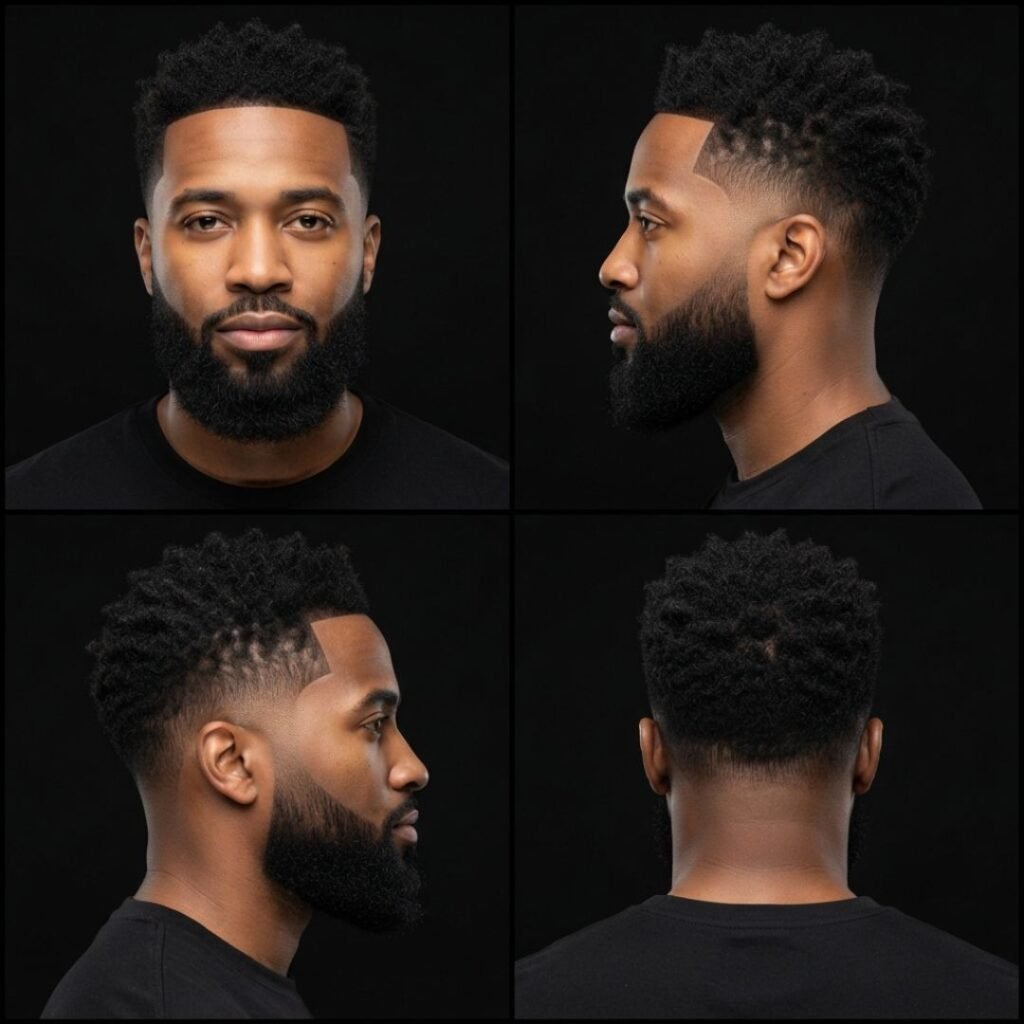
A full beard paired with a mid taper fade creates a mature, balanced look where the beard and haircut share equal visual weight. This combo suits guys with longer or narrower face shapes since a full beard adds width along the jaw. Beard length usually runs half an inch or longer, shaped with clippers and a straight razor along the neckline and cheek line. Trim the beard every 2 weeks alongside the fade so both stay in proportion to each other.
Mid Taper Fade with Short Beard or Stubble
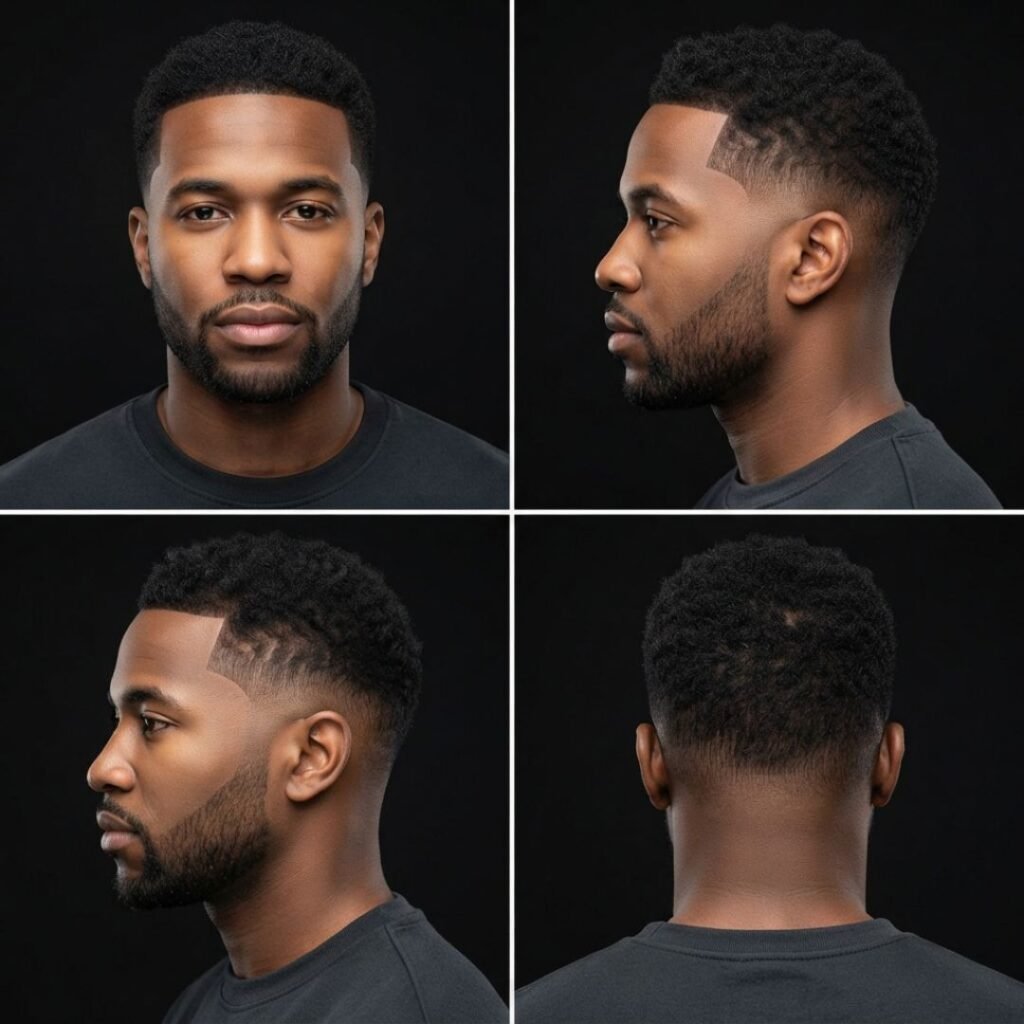
This pairing keeps facial hair at stubble length, around 1/8 to 1/4 inch, alongside a mid taper fade for a low-maintenance, rugged look. It suits guys who don’t grow a full beard evenly or prefer a quicker morning routine. Barbers usually use a #1 clipper guard on the beard, cleaning up the neckline and cheek line for definition. A light beard oil daily keeps short stubble from feeling scratchy or looking patchy.
Mid Taper Fade with Angular Beard
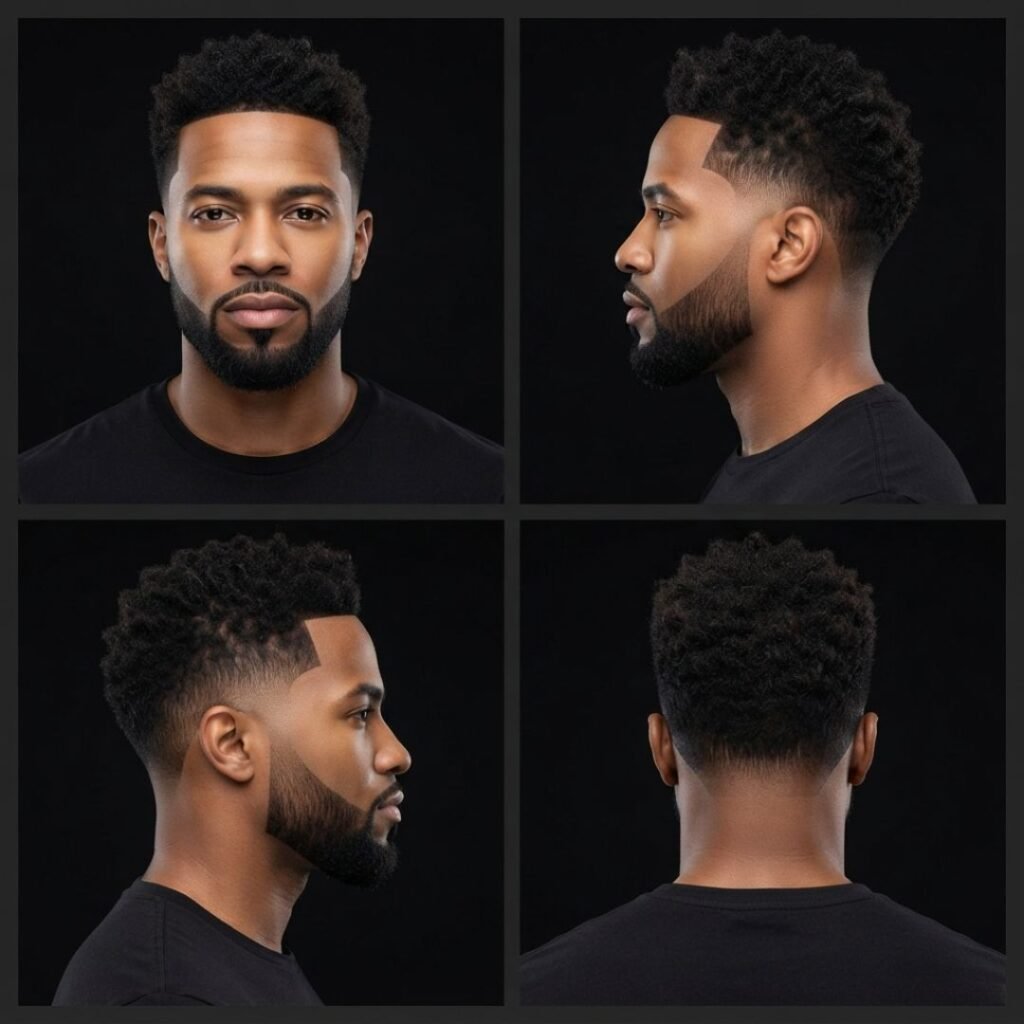
An angular beard uses sharp, straight-line shaping along the jaw and cheeks instead of a rounded natural beard line, combined with a mid taper fade for a sharper overall look. This style works especially well on rounder face shapes since the hard angles create the appearance of a more defined jawline. Barbers use a straight razor to carve clean lines, usually requiring at least 1/2 inch of beard growth to work with. Book beard line touch-ups every 10 to 14 days since angular lines show growth and blur faster than natural shapes.
Mid Taper Fade with Designs and Artistic Details
Mid Taper Fade with Shaved Line Design
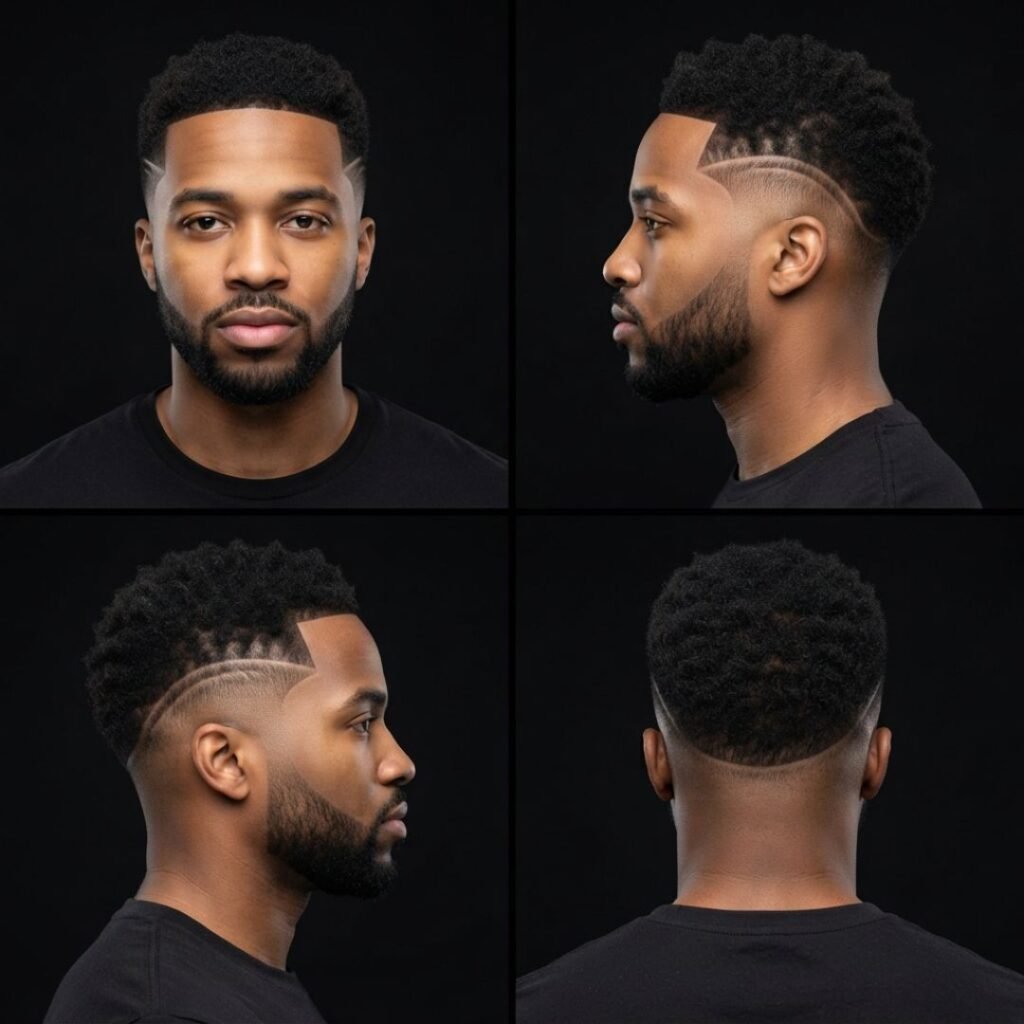
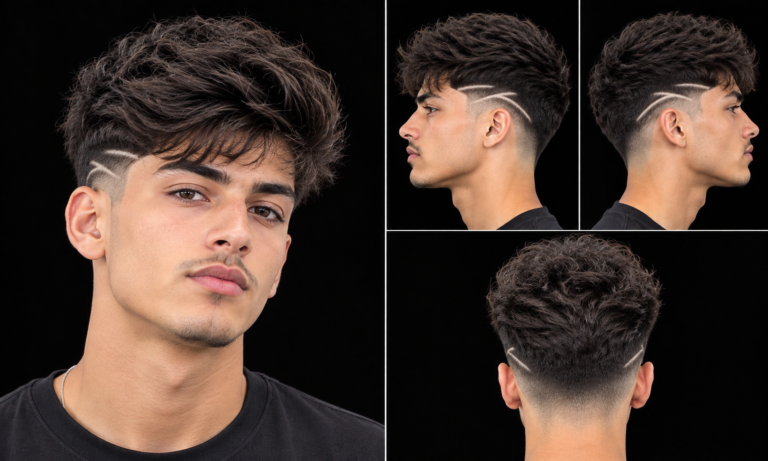
A single shaved line design adds one clean line, usually along the part or through the fade zone, for subtle extra detail on a mid taper fade. This works for guys who want something extra without a full pattern taking over the haircut. Barbers use a T-outliner to carve the line freehand, typically taking an extra 5 to 10 minutes at the chair. Keep the line sharp by asking your barber to touch it up between full haircuts if you visit every 2 weeks.
Mid Taper Fade with Geometric Pattern
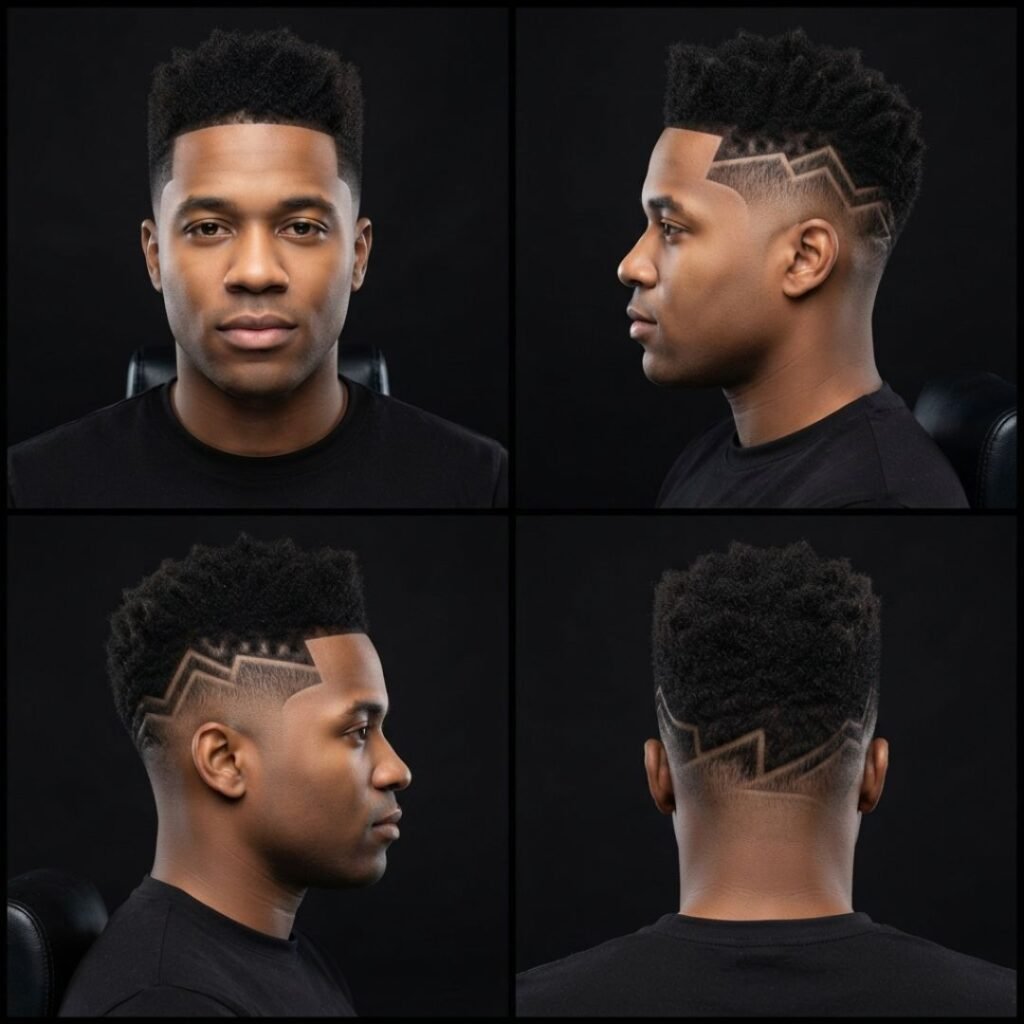
A geometric pattern design uses shapes like triangles, zigzags, or diamond cutouts shaved into the fade zone for a bold, artistic statement. This style suits guys who want their haircut to stand out at events, photoshoots, or for personal style expression. Complex geometric designs usually cost an extra $15 to $30 on top of the base haircut price and take 20 to 40 additional minutes. Designs need a full refresh every 1 to 2 weeks since the shaved lines grow out and blur the pattern fast.
Mid Taper Fade with Full Line-Up and Crisp Edge-Up
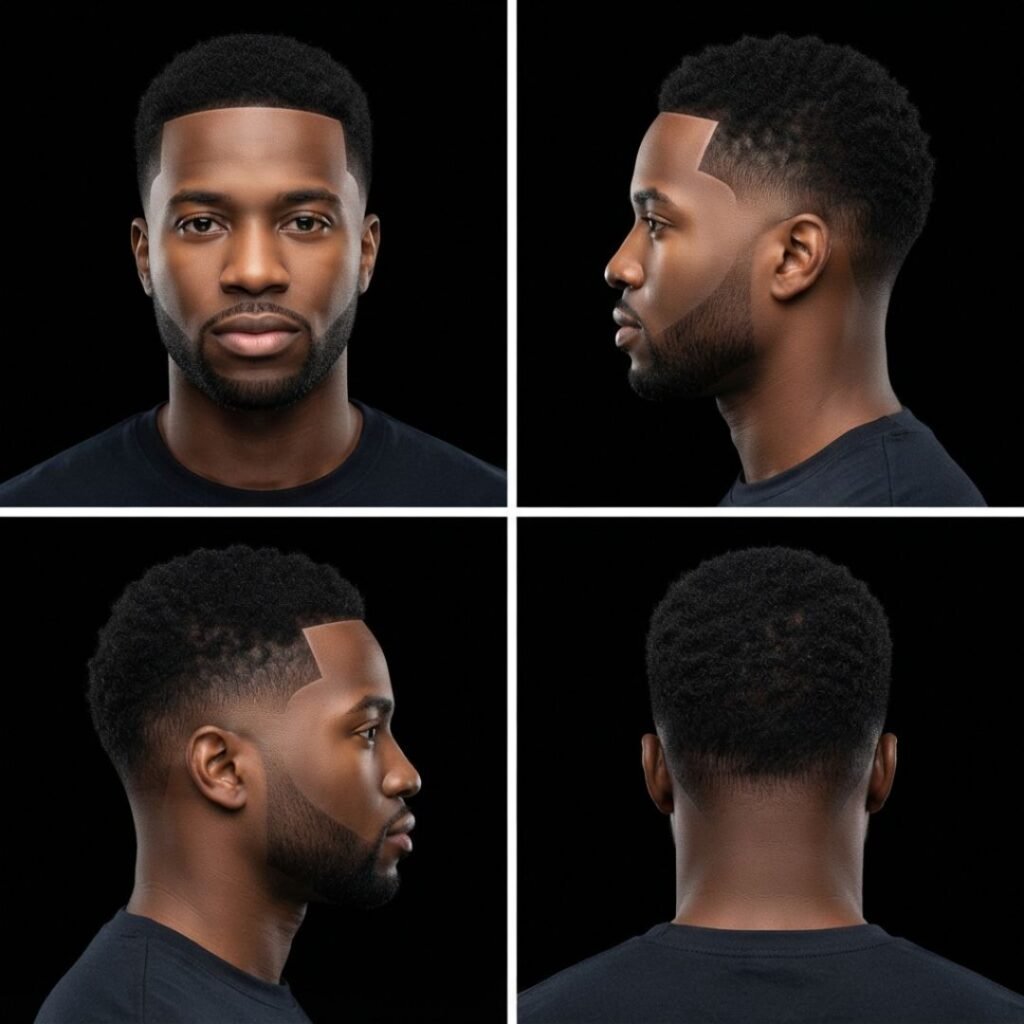
This version focuses purely on sharpening the hairline, sideburns, and neckline to razor precision, paired with a clean mid taper fade for the sharpest possible finished look. It’s the go-to combo for guys prepping for interviews, weddings, or any event where presentation matters most. Barbers use a straight razor or T-liner along the entire perimeter of the hairline, a process that adds 5 to 10 minutes to a standard cut. Schedule a line-up refresh every 7 to 10 days since hairline growth is the first thing that makes a fresh cut look old.
How to Ask Your Barber for a Mid Taper Fade?
Tell your barber exactly where you want the fade to start, what guard number to leave on top, and how much contrast you want at the sides. Miscommunication is the number one reason guys leave the chair unhappy, so specific words matter more than general ones like “just a fade.”
Here’s a script you can literally read off your phone:
“I want a mid taper fade — start the blend around the middle of my head, not up by the temple and not down by the ear. Leave a #3 on top and blend down to skin by the bottom of the fade. Keep my hairline natural, no hard part unless I ask for one.”
If you’re not sure about your face shape or which top style to pair it with, say this instead:
“I have a [round/square/oval] face shape. What top style would you recommend with a mid taper fade for my hair type?”
A good barber will actually ask you questions back — about your lifestyle, how often you can get touch-ups, and what products you already use. If they don’t ask anything and just start clipping, that’s often a sign to find a new barber next time.
Mid Taper Fade Maintenance and Aftercare for Black Men
A mid taper fade needs a fresh trim every 2 to 3 weeks to stay sharp, since the skin-close area at the sides grows out fastest. Between visits, keep the fade area moisturized to prevent the dry, ashy look that shows up on faded skin more than on longer hair.
- Moisturize the fade area daily with a lightweight lotion, not heavy grease, to avoid clogged pores
- Wear a durag or silk cap at night to protect the top style from frizz and lint
- Book your next appointment before you leave the chair so you don’t wait too long between fades
- Ask your barber to “line up” your hairline between full cuts if you go longer than 2 weeks
- Avoid touching up your own fade with home clippers unless you’ve practiced — uneven blending is hard to fix
Most barbershops offer a loyalty card or bundle pricing if you commit to regular visits, often saving you $5 to $10 per cut over time. Ask your shop directly since this isn’t always advertised on their price list.
The Cultural Significance of the Mid-Taper Fade in Black Grooming History
The fade haircut has deep roots in Black barbershop culture, tracing back to military-style cuts in the 1940s and 1950s that Black barbers adapted and refined. By the 1980s and 1990s, fades became a signature look tied to hip-hop culture, with high-top fades and designs turning into statements of identity and style. Barbershops themselves became community spaces — places for conversation, mentorship, and connection that went far beyond just getting a haircut.
The mid taper fade specifically grew popular as a middle-ground option once high fades started feeling overused in mainstream media around the 2010s. Today it represents a kind of quiet confidence — sharp enough to show effort, subtle enough to wear anywhere from a job interview to a family cookout. Understanding this history is part of why so many Black barbershops treat the fade as a craft passed down, not just a quick clipper job.
FAQs
What is a mid taper fade?
A mid taper fade is a haircut where the blend starts at the middle of the side of the head, between the ear and the temple.
How much does a mid taper fade cost?
A mid taper fade usually costs between $25 and $45, though prices can go up to $65 in bigger cities.
What guard number do you use for a mid taper fade?
Barbers usually start with a #2 or #3 guard and fade down to skin or a #0.5 near the bottom.
How long does a mid taper fade last?
A mid taper fade stays sharp for about 2 to 3 weeks before it needs a touch-up.
Is a mid taper fade good for black hair?
Yes, a mid taper fade works great on black hair since coily and curly textures hold shape on top while the sides stay clean.
Final Thought
A mid taper fade gives you room to experiment without ever looking messy or out of place. Whether you’re rocking a full afro, fresh locs, or a tight buzz cut, this fade adapts to your hair type and your lifestyle. Bring the barber script above to your next appointment, pick a style from this list, and walk out knowing exactly what you asked for.