Mid Taper Blowout Fringe: 9 Stylish Haircuts for Men
If you’ve been scrolling barbershop photos and keep seeing that clean, faded-out look with a piece of hair falling over the forehead, you’re looking at a mid taper blowout fringe. It’s one of the most requested cuts in shops right now, and for good reason. It’s sharp, it grows out well, and it works on way more hair types than people think.
I’ve cut this style more times than I can count, so let’s skip the fluff and get into exactly what it is, who it suits, and what to say when you sit in the chair.
What Is a Mid Taper Blowout Fringe?
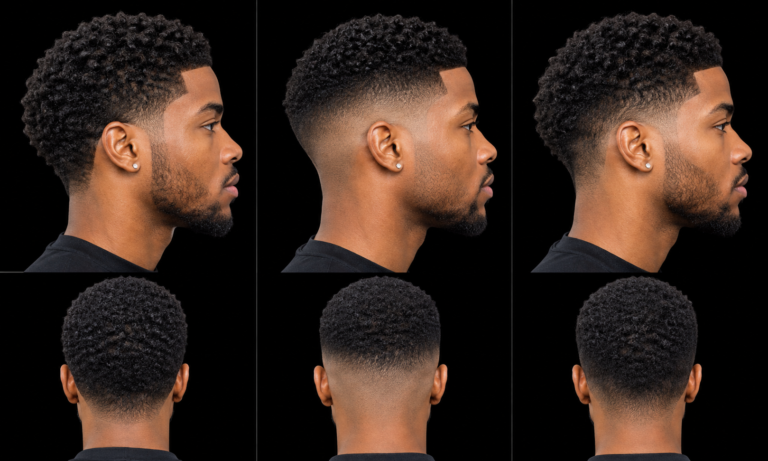
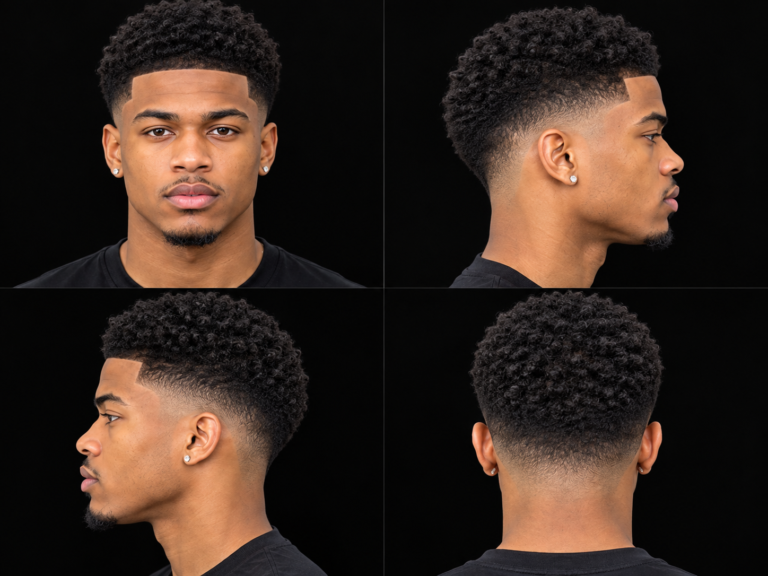
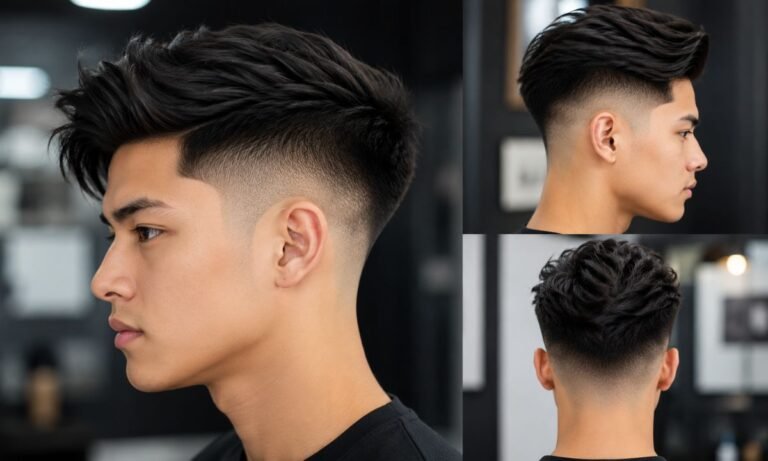
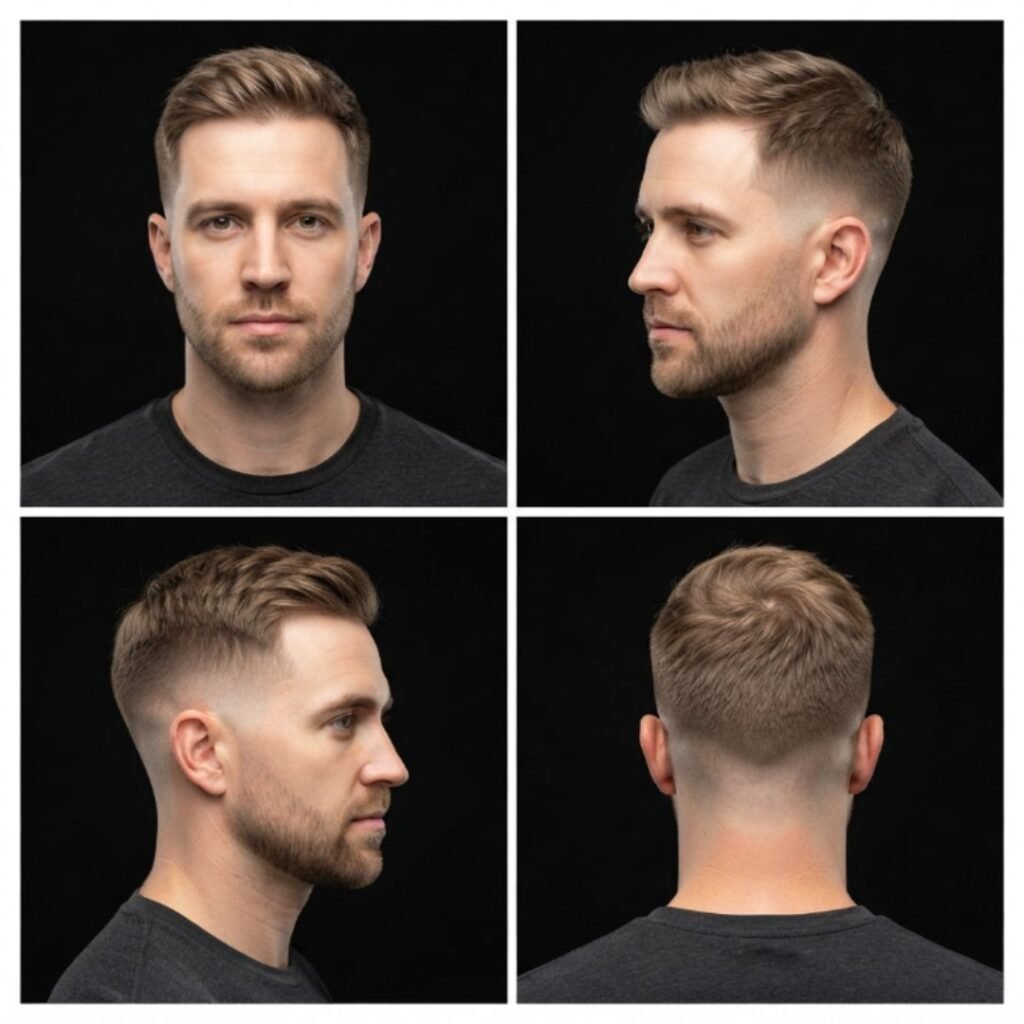
A mid taper blowout fringe is a haircut where the sides fade down starting mid-way up the head, and the top gets pushed forward and up into a fringe. The “blowout” part means the top has volume, not a flat comb-down look.
It sits between a low taper and a high taper. That’s the whole point of it — it’s the middle ground.
Where Does the Taper Actually Start?
The taper on this cut starts between the middle of your ear and your temple. On most heads, that’s about an inch and a half above the ear.
Barbers usually run a guard #3 or #4 at that starting point, then blend down to a guard #1 or skin near the neckline. If you want it softer, ask for the taper to start a bit lower, closer to the ear itself.
What Does a Mid Blowout Taper Fringe Look Like?
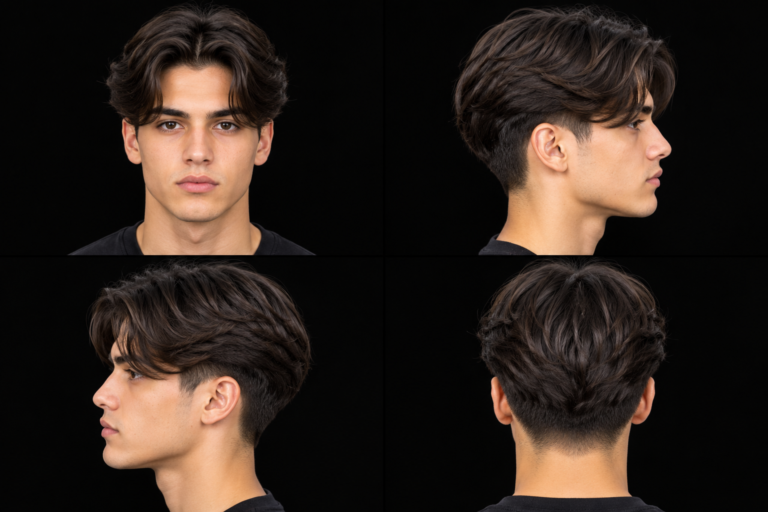
The finished cut has three clear zones. The top stays long enough to style forward — usually 3 to 5 inches. The mid-section blends the length down smoothly. The bottom is tight and clean around the ears and neck.
The fringe itself sits over the forehead, either pushed straight down or angled to one side. Most guys blow it dry with a round brush to get that lifted, textured front piece instead of a flat one
Also Read This Style: Middle Part Haircut: 30 Trendy Styles for Men
What Are the Mid Blowout Taper Variations?
The base cut is flexible. Small changes to the top or the part completely change how the whole style reads. Here are the four most common versions barbers actually cut.
Adding a Textured Fringe
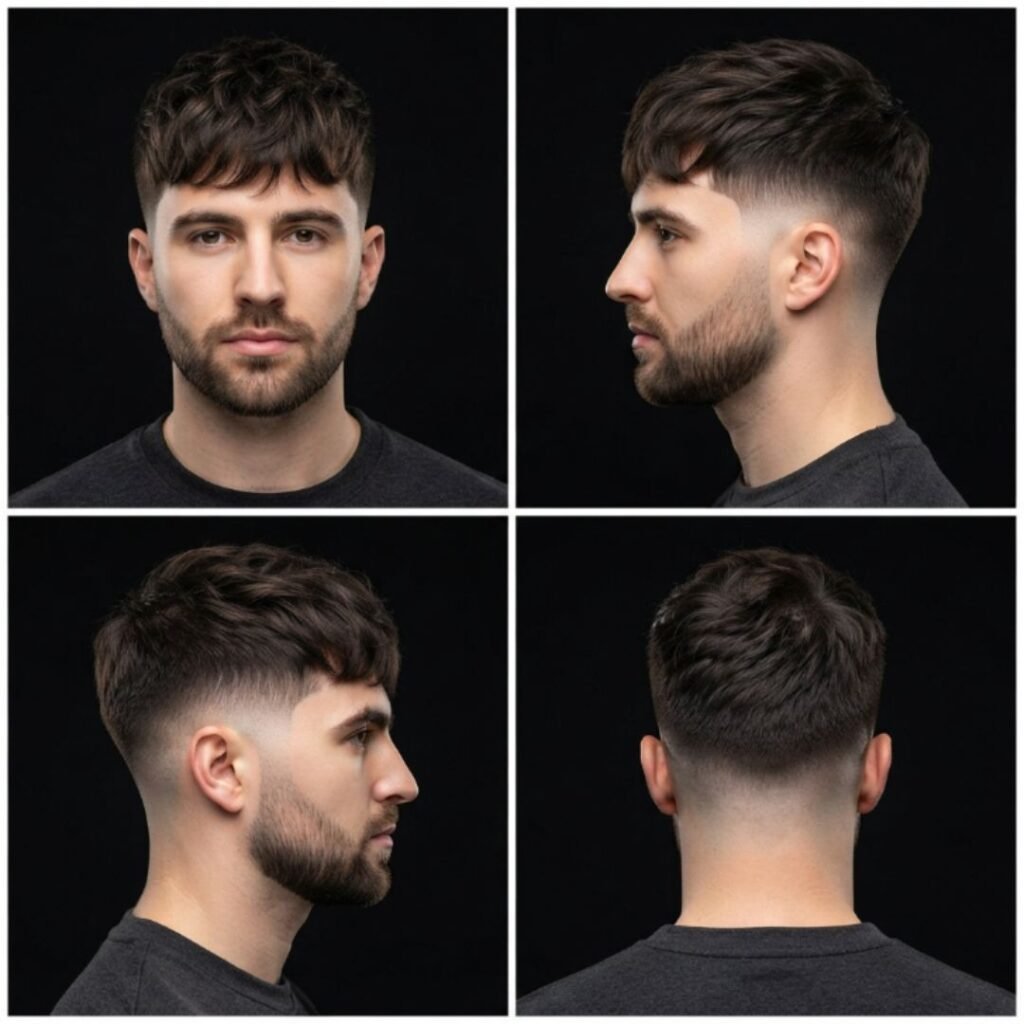
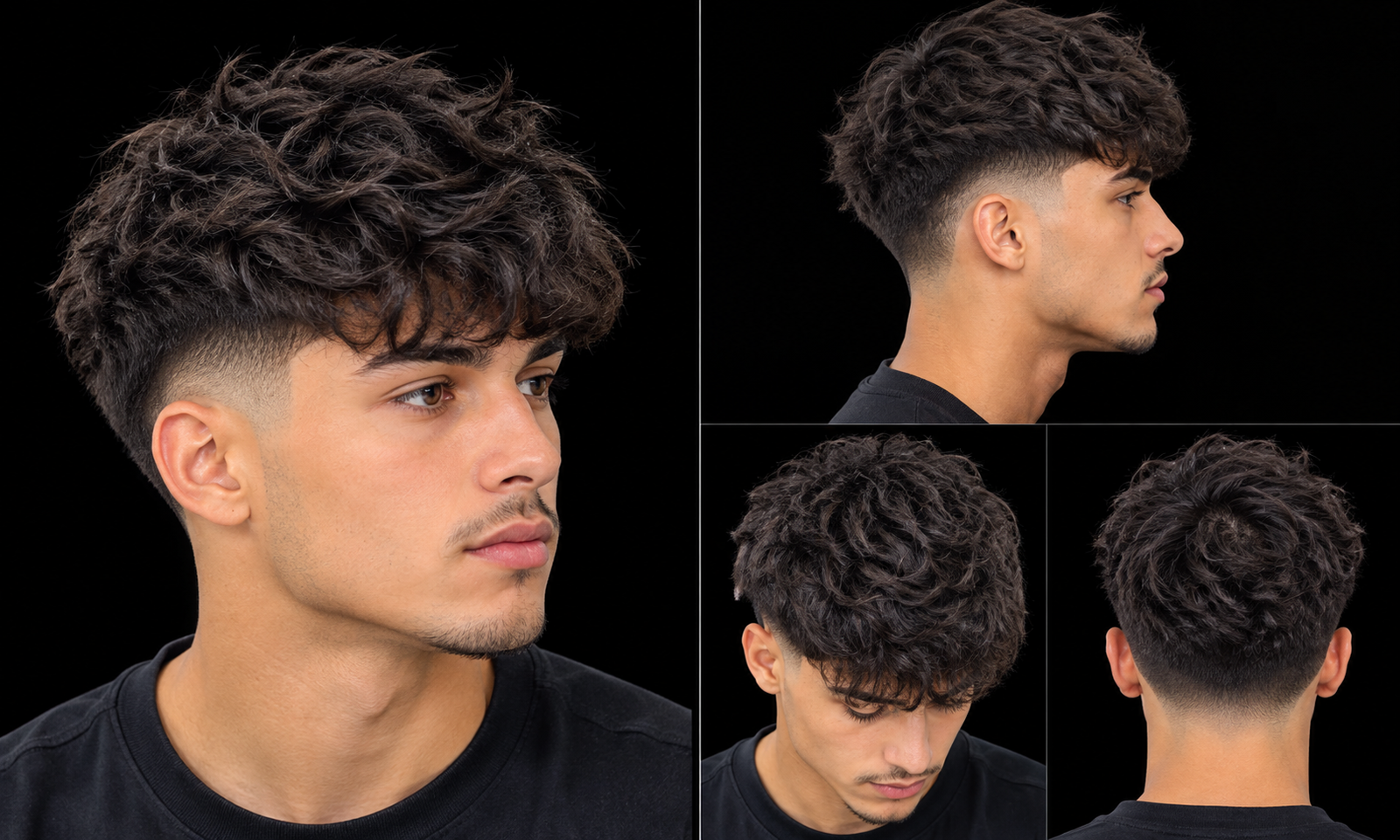
A textured fringe uses point-cutting scissors on the top layer to break up thick, blocky hair. This version suits guys with thick or coarse hair who want the fringe to look less like a solid curtain. Tell your barber to “point cut the fringe, don’t blunt cut it,” and ask for it around 4 inches on top. It needs a texturizing spray or clay, and a trim every 3 to 4 weeks to keep the shape from getting shaggy.
Adding a Middle Part
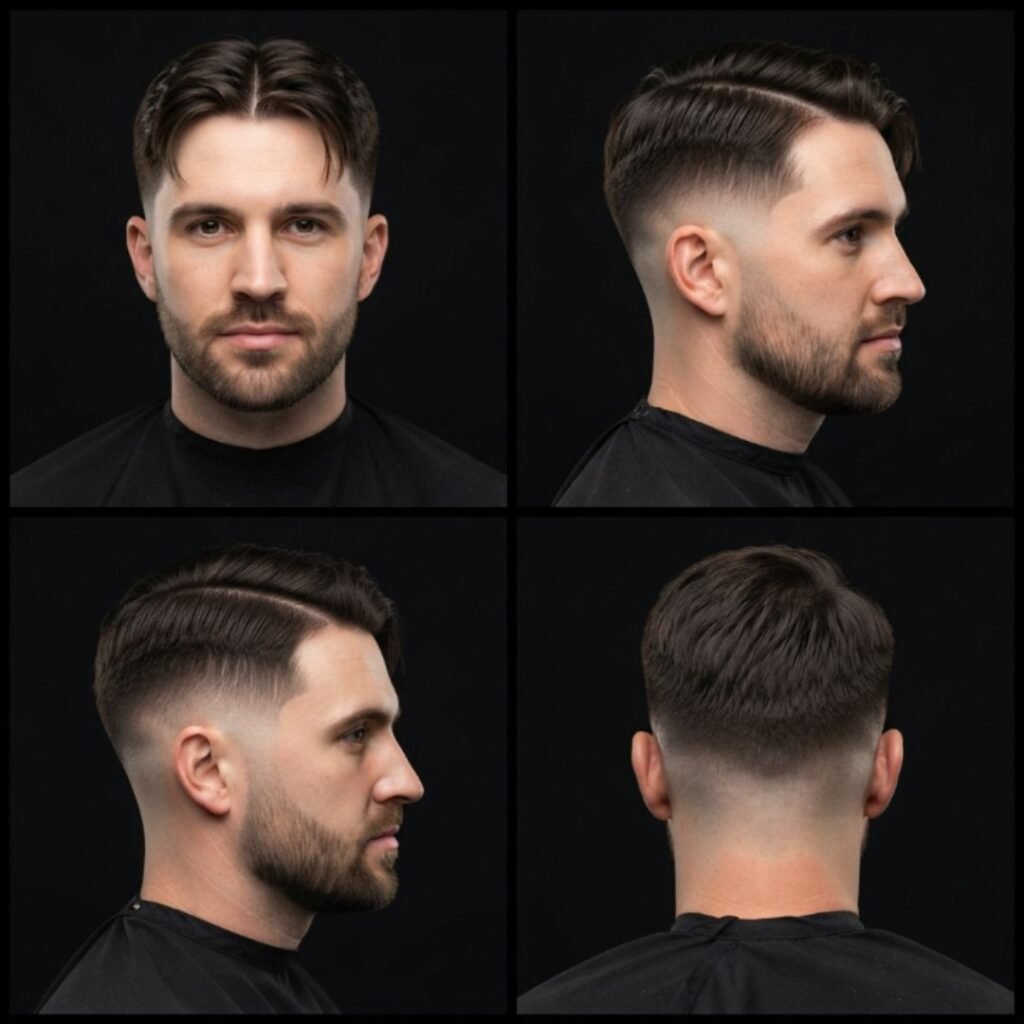
The middle part version splits the fringe down the center instead of pushing it all one direction. It works best on straight or slightly wavy hair, since curly hair fights a hard middle part. Ask your barber for a “hard part” or “skin part” if you want a line shaved in to hold the split in place. You’ll need a comb and a light-hold pomade daily to keep the part from drifting shut.
The Slicked-Back Version
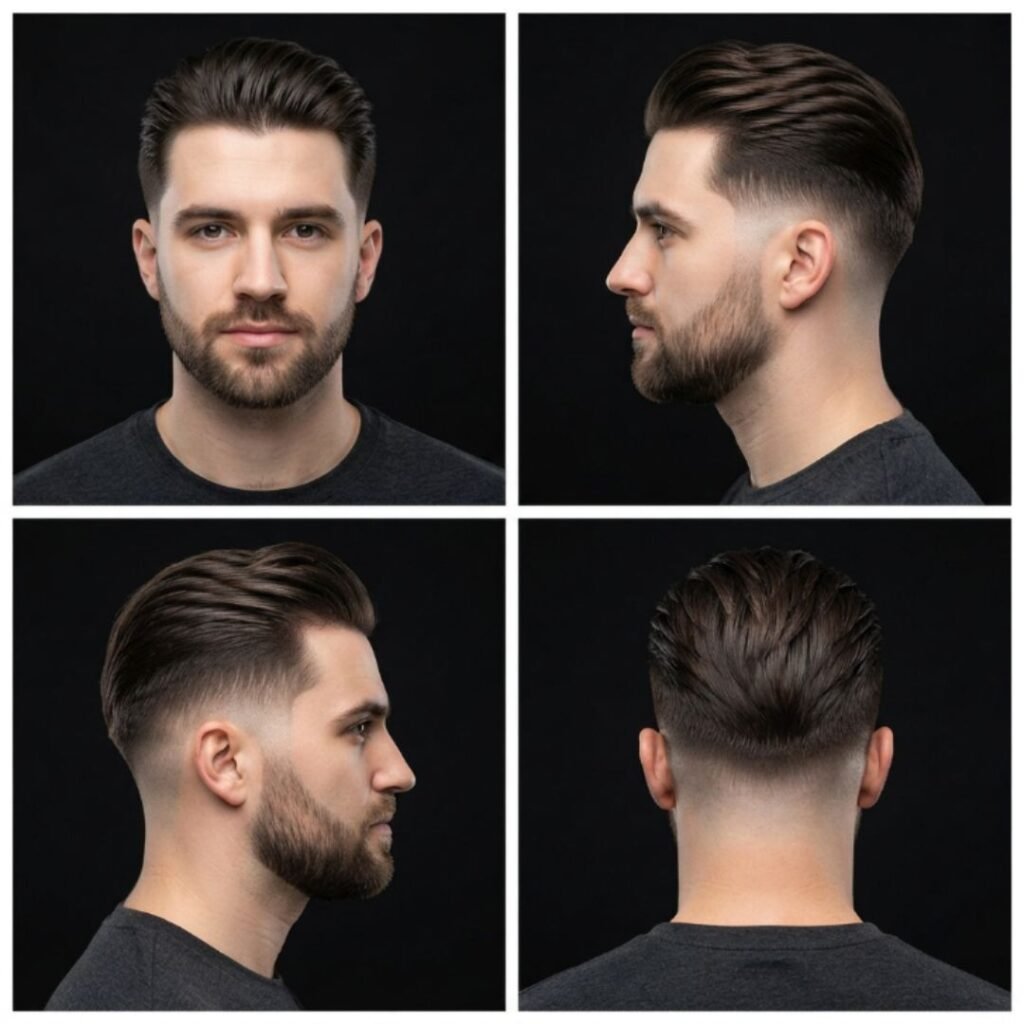
This one skips the forward fringe and pushes the top straight back with a wet or matte finish. It suits guys who want the taper without the “boy band” fringe look, and it reads more mature for office settings. Ask for the same mid taper on the sides, but tell your barber to leave the top a little longer, closer to 5 inches, for grip. Use a strong-hold pomade or gel, and comb it back while the hair is still damp for the cleanest result.
The Burst Taper Variation
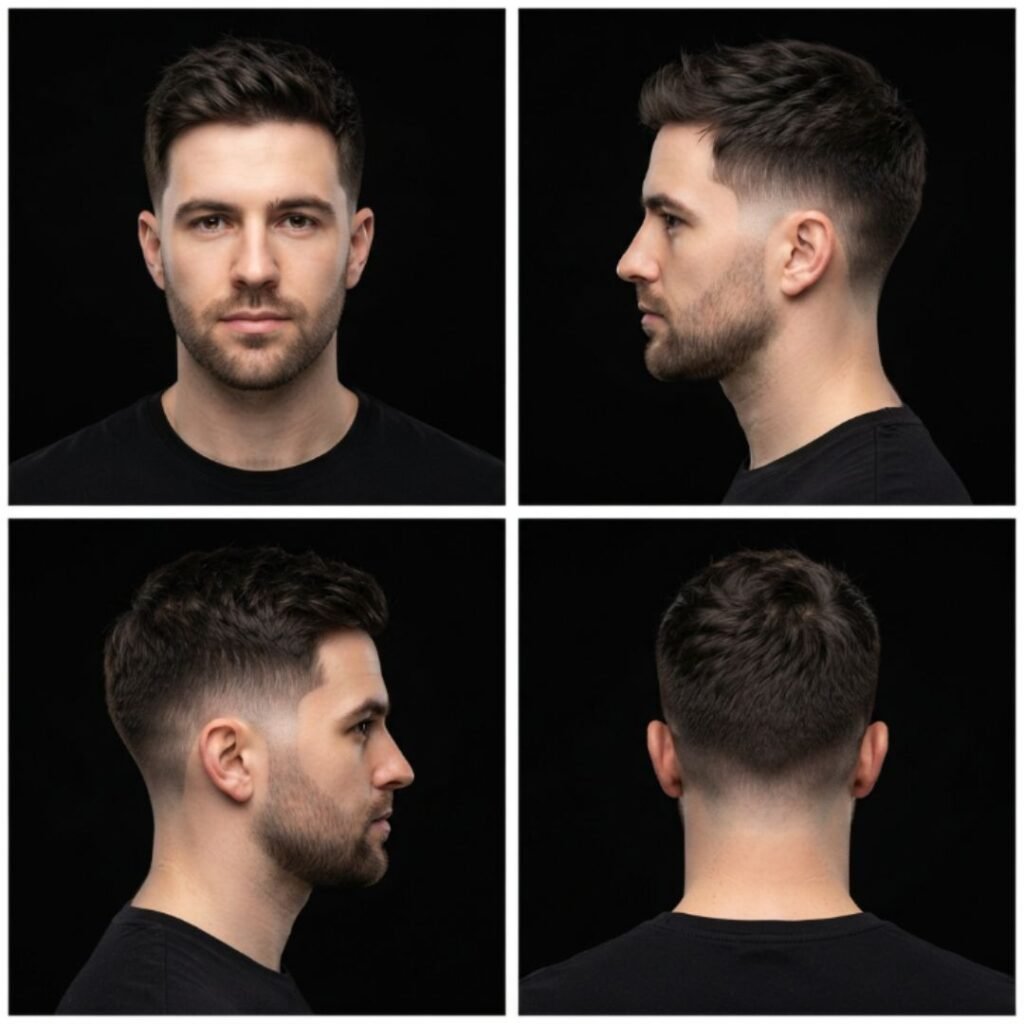
A burst taper curves the fade around the ear instead of running it in a straight line across the head. This suits guys who want more definition without a hard fade line, and it works especially well with wavy or curly hair on top. Ask for “a burst fade around the ears, mid taper on the rest” so your barber knows exactly where to curve the blend. It holds its shape for about 3 weeks before the curve starts growing out and needs a refresh.
How Do You Ask Your Barber for This Cut?
Say this, word for word: “I want a mid taper blowout — start the fade about an inch and a half above my ear, blend to skin at the neckline, and leave the top long enough to blow forward into a fringe.” That single sentence covers the taper height, the blend, and the top length in one go.
Natural Edge or Sharp Edge-Up?
A natural edge follows your own hairline with no razor work, which grows out softer and suits guys with cowlicks. A sharp edge-up uses a razor or trimmer to draw a crisp line at the front and sides, which looks cleaner for the first week but grows out faster. Most barbers can switch between the two in under a minute, so just tell them which one you want before they start.
Consultation or Walk-In?
If it’s your first time getting this cut, book a consultation slot instead of a walk-in. A 5-minute chat before the clippers touch your head means the barber can check your hairline, your cowlicks, and your face shape first. Walk-ins work fine once you’ve had the cut before and just need a maintenance trim.
Does This Haircut Work With Your Hair Type?
A mid taper blowout fringe works on almost every hair type, but the styling routine changes a lot depending on your texture. Here’s how it breaks down.
| Hair Type | Works With This Cut? | What Changes |
| Straight | Yes | Fringe falls flat easily, needs a round brush for lift |
| Wavy | Yes, great match | Natural texture holds the fringe shape well |
| Curly | Yes, with care | Ask for extra length on top so curls don’t shrink up too short |
| Coily | Yes | Works best as a shorter, coiled fringe rather than a swept one |
| Fine or Thin | Yes, with product | Needs volumizing powder or mousse to avoid looking flat |
Straight Hair
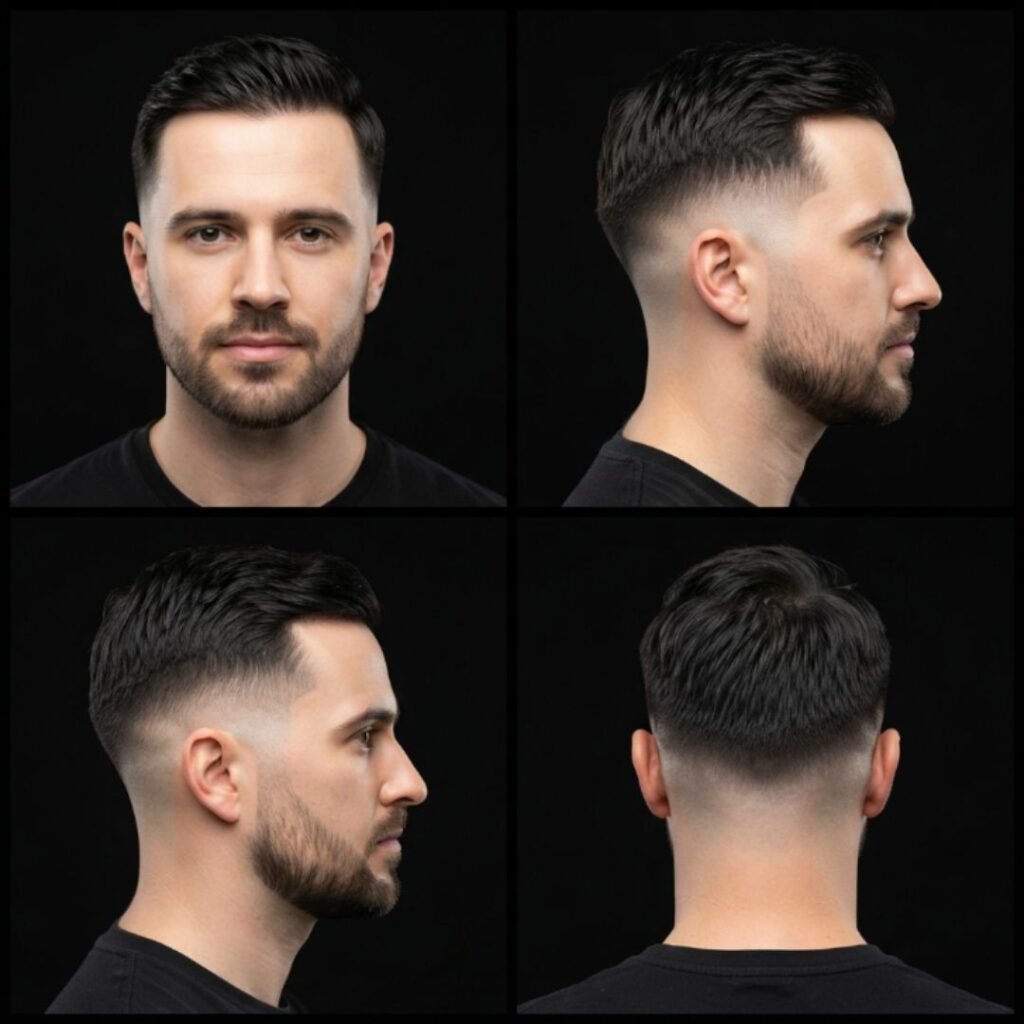
Straight hair gives the cleanest, sharpest version of this cut. The downside is the fringe can go flat within a few hours. A quick blast with a hair dryer and a round brush each morning fixes that in under two minutes.
Wavy Hair
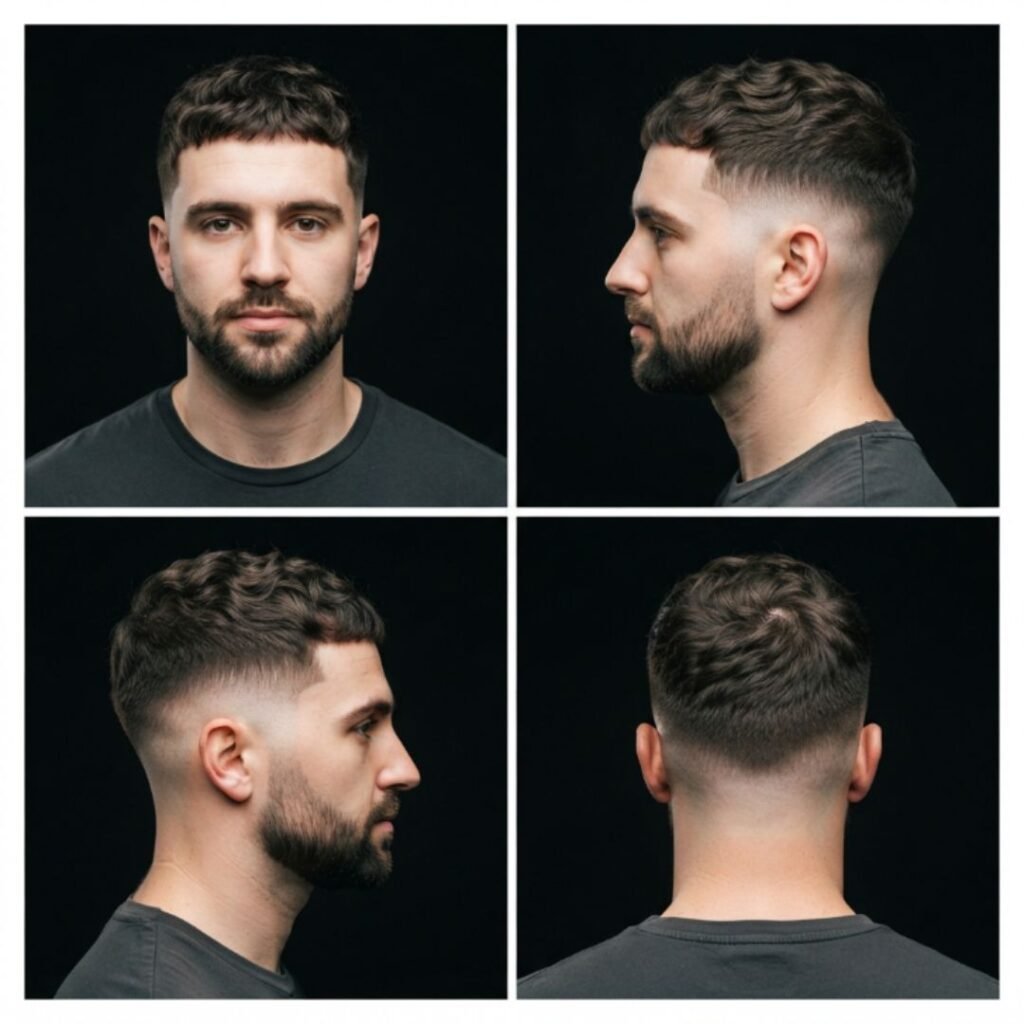
Wavy hair is honestly the easiest match for a mid blowout taper. The natural wave gives the fringe built-in texture and movement without much product. A light sea-salt spray is usually all it needs.
Curly Hair
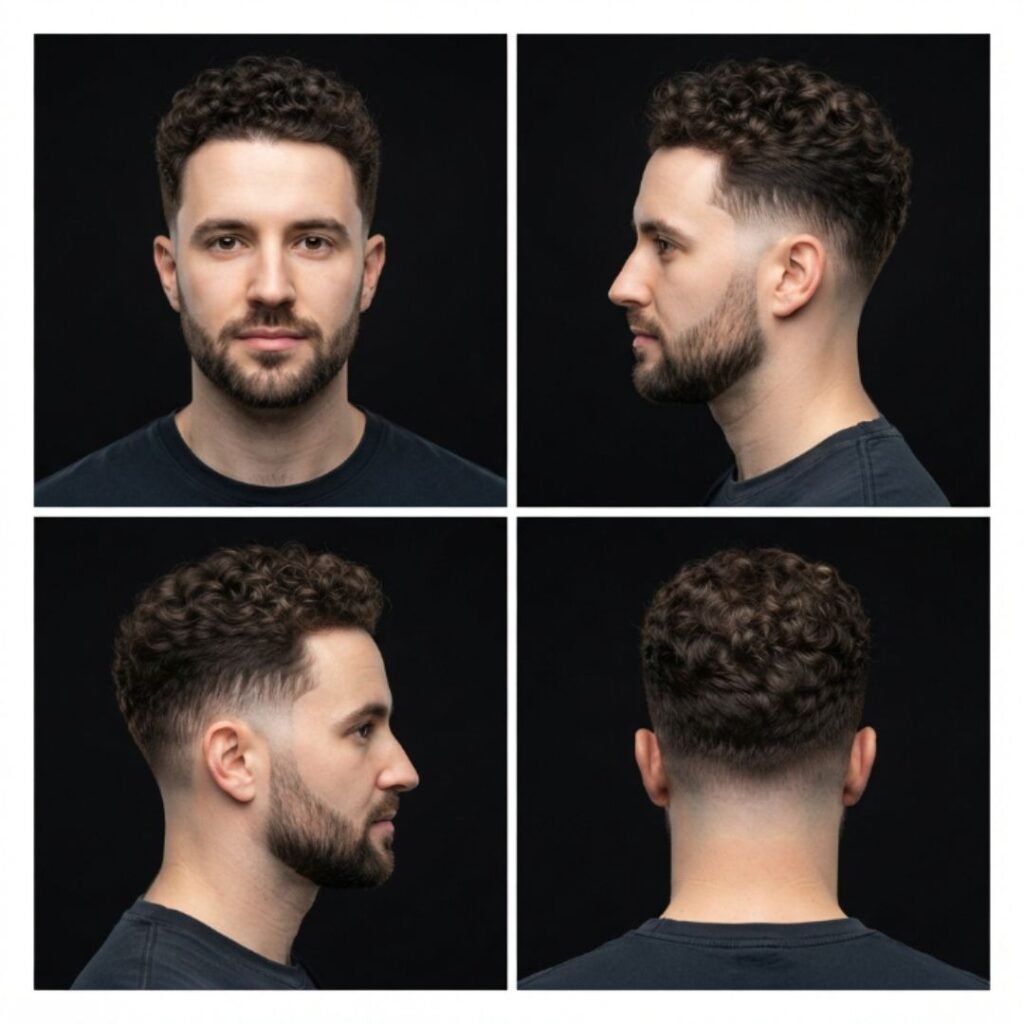
Curly hair shrinks up more than people expect once it’s cut. Ask your barber to leave an extra half-inch on top compared to what they’d cut for straight hair. A curl cream keeps the fringe defined instead of frizzy.
Coily Hair
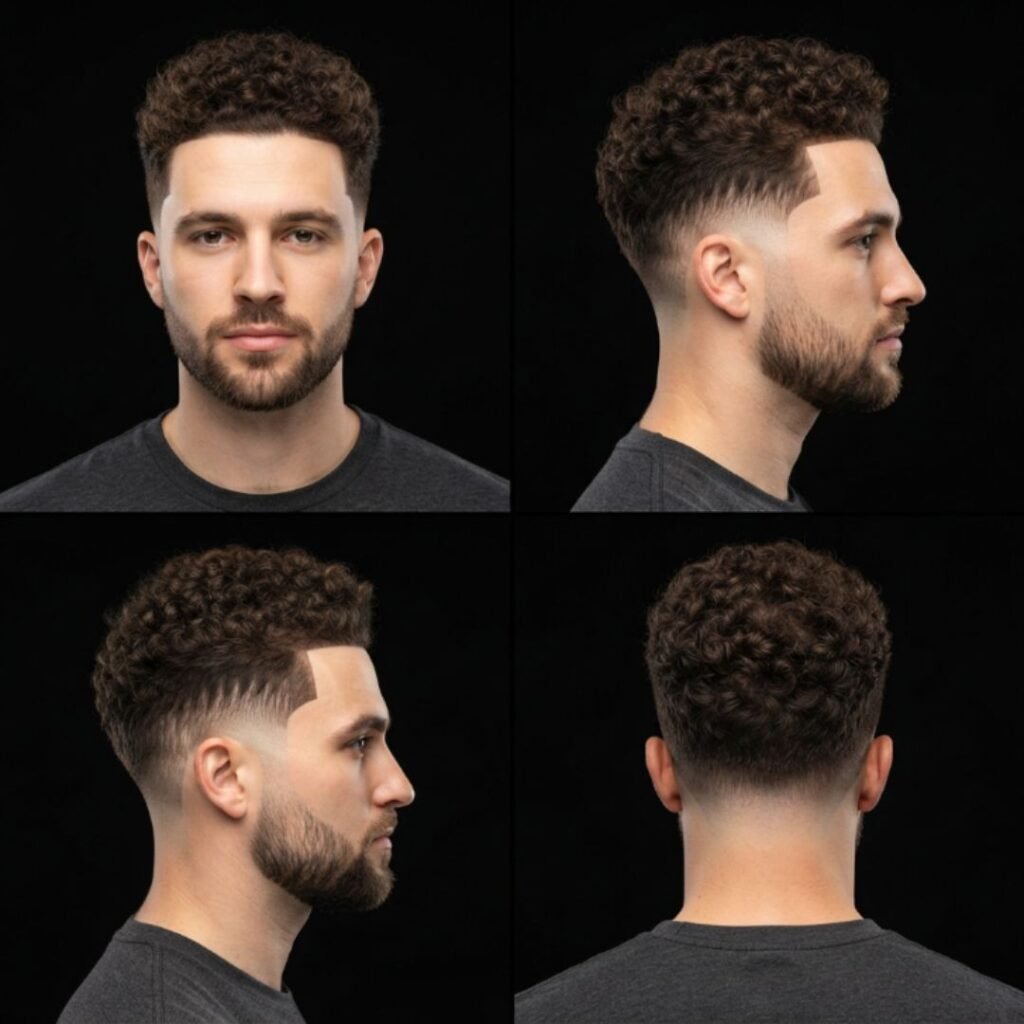
Coily hair holds this style best as a shorter, more compact fringe rather than a long swept-forward piece. Ask for a lower taper start if you want more contrast against the tight curl pattern on top. A leave-in conditioner before styling stops the ends from drying out.
Fine or Thin Hair
Fine or thin hair can look sparse in a mid blowout taper without the right product. A volumizing powder at the root before blow-drying gives it the lift this style needs. Keep the fringe on the shorter side, around 3 inches, so it doesn’t look limp by midday.
How Do You Style This Cut at Home?
Start with damp hair and a round brush. Blow-dry the fringe up and slightly forward, holding the brush at the root for 10 to 15 seconds per section. Finish with a small amount of product worked through with your fingers, not a comb, to keep the texture natural.
Match Your Product to Your Hair Type
Thick or coarse hair does best with a matte clay. Fine hair needs a lightweight mousse or powder. Curly hair holds better with a cream than a gel, since gel can make curls look crunchy instead of defined.
How Long Between Touch-Ups?
Book a touch-up every 2 to 3 weeks. The taper is the part that grows out fastest, so even if your top length still looks fine, the fade line will start softening and losing its shape after 3 weeks. Most shops charge $25 to $45 for a taper touch-up, and $35 to $60 for a full cut with the fringe reshaped.
Mid vs. Low vs. High Taper: Which Wins?
There’s no single winner — it depends on how much contrast you want between your sides and your top.
| Taper Type | Fade Starts | Best For | Contrast Level |
| Low Taper | Just above the ear | Subtle, office-friendly looks | Low |
| Mid Taper | 1.5 inches above ear | Balanced, most versatile | Medium |
| High Taper | Near the temple | Bold, high-contrast styles | High |
A mid taper blowout fringe sits in the middle because it’s the safest choice if you’re not sure how much fade you want. It reads clean without looking like a drastic change.
Common Mid Blowout Taper Fringe Mistakes to Avoid
- Asking for “a fade” without specifying where it starts — you’ll end up with a low or high taper instead
- Skipping the round brush and letting the fringe air-dry flat
- Waiting more than 4 weeks between touch-ups, which blurs the taper line
- Using gel on curly or coily hair, which flattens the natural texture
- Not telling your barber your hair type, especially if it’s fine or thin
FAQs
What is a mid taper blowout fringe?
It’s a haircut with a fade starting mid-way up the head and a longer top styled forward into a fringe.
How do I ask for a mid taper blowout fringe?
Tell your barber to start the taper 1.5 inches above your ear and leave the top long enough to blow forward.
Is a mid taper blowout fringe good for round faces?
Yes, the height on top adds length to a round face and balances it out.
How often should I get a mid taper blowout fringe touched up?
Every 2 to 3 weeks, since the taper line softens fastest.
How much does a mid taper blowout fringe cost?
Usually $35 to $60 for a full cut, depending on the shop and city.
Summary
A mid taper blowout fringe gives you a fade that starts about 1.5 inches above the ear, blended into a fuller, forward-styled top. It works across nearly every hair type, from straight to coily, as long as you match your styling routine to your texture. Book a touch-up every 2 to 3 weeks, use the barber script above word for word, and you’ll walk out with exactly the cut you pictured. Next time you’re in the chair, ask for it by name.